
A core tenet of Buddhism is that attachment is the source of all suffering. On the other hand, as Tennyson wrote in “Memoriam,” “‘Tis better to have loved and lost than never to have loved at all.”
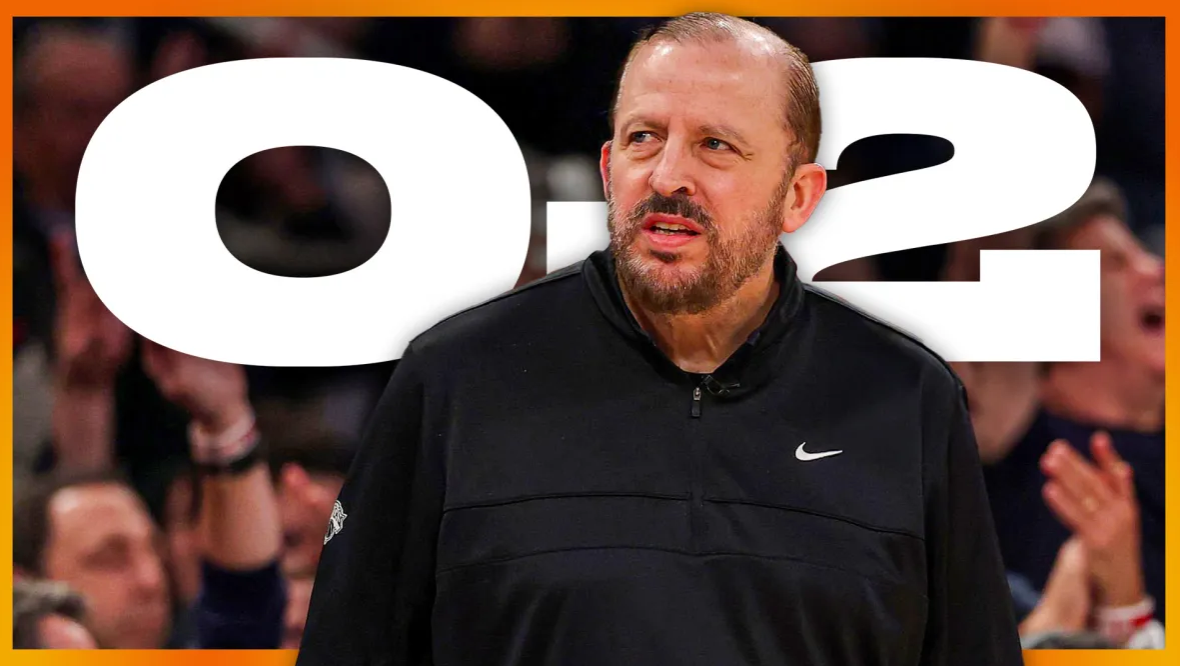
I find myself trying to reconcile these two statements after watching the Knicks drop another playoff game at Madison Square Garden, 114-109 to Indiana, to fall into a 2-0 hole, elimination staring them squarely in the face. The game followed a script that is somewhat familiar to Knicks fans, but unlike so many other times they couldn’t rewrite it into a comeback win.
After an agonizing Game 1 loss, many – this author included – expected the Knicks to come out with a sense of urgency and go for the throat early. Instead, the Pacers took a 19-9 lead, as the much-discussed Knicks’ starting lineup continued to look as stuck in the mud as they have for much of the playoffs. Like clockwork, the insertion of Mitchell Robinson and Deuce McBride flipped the script, pushing the Knicks to come back and tie the game, though the Pacers continued hitting shots and forcing turnovers, taking a five-point lead into the second quarter.
The Knicks continued to chip away, going up seven midway through. Notably, the starters did not share the floor the entire quarter. The Knicks went into the half up 3; all in all a success after their rough start. Robinson had four points, seven rebounds and two blocks, resulting in a game-high +13; even that production understates his impact, forcing the Pacers to dedicate two, sometimes three bodies simply to try and keep him off the offensive glass (often failing to, in spite of that).
The same starting lineup came back in the third and the Pacers capitalized, building a 10-point lead. They seemed to have much better answers for the Knicks’ switching defense, attacking Karl-Anthony Towns and Jalen Brunson while forcing miscommunications. Yet again, the Knicks’ bench bailed them out, with Robinson and McBride bringing energy and aggression to the defense. At the end of the third quarter it was 81-81. 12 minutes to go, anyone’s game.
Tom Thibodeau made the curious decision to insert Cameron Payne, who’s struggled much of the playoffs, with the Knicks’ season potentially on the line. The Pacers took control, building a nine-point lead quickly as Brunson could only watch from the bench. Towns continued to struggle on defense, failing to close out on shooters, prevent drives or make the Pacers uncomfortable. KAT was replaced relatively early in the fourth; he would not return.
The lineup change seemed to help, as the Knicks offense began to find its rhythm. They still struggled to make stops against an elite offense that seems to have found its stride in the fourth quarter of both games. But the Knicks withstood a barrage of threes, giving themselves a chance to tie the game. With 14 seconds left they cut the lead to one, Brunson finding a cutting Josh Hart for an uncontested layup, albeit after a long possession that saw precious time run down. After a quick foul and two Aaron Nesmith free throws, Thibodeau elected not to call timeout, putting the game in the hands of the Clutch Player of the Year. This time Brunson couldn’t deliver, taking a quick logo three that was no good. That was all she wrote.
These two losses, after the incredible highs of beating the defending champions, have been particularly painful. The Knicks, masters of close games, have unraveled in big moments against a Pacers team that never seems to take its foot of the gas. Is this pain connected to the euphoria we experienced during the Celtics’ series?
Perhaps a reconciliation can be found in the work of self-help author and blogger Mark Manson, famous for his book “The Subtle Art of Not Giving a Fuck.” He noted the goal should not be to not give a fuck about anything, but to understand that fucks to give are a precious currency and should be spent on the right things. What are those right things? Is there a way to enjoy the highs without being bogged down in misery by the lows? Is sports fandom inherently the wrong kind of attachment?
Consider the words of Jean-Paul Sartre: “Hell is other people.” People sometimes mistake this quote to be fundamentally misanthropic, but I don’t think that’s how he meant it. Rather, our consciousness and attachment to the words, narratives and actions of other people (often colored by our own projections and interpretations) creates suffering. So how can this inform someone like the author on what things to spend fucks on?
I don’t regret caring about the Knicks. I don’t regret the near 30 years of fandom, many (especially 2000-2020) filled with losses and disappointment. I’ve made many friends, had great experiences, even learned and enriched my life through following the Knicks. But it’s time to stop giving a fuck about a lot of the things that come with it.
It’s time to stop giving any meaning to Tyrese Haliburton doing the choke sign, Reggie Miller trolling the Knicks and the constant shade (real and perceived) the media throws at the Knicks. It’s time to let go of the weight of historical narratives and performance. It’s time to stop worrying about whether other fans (falsely or correctly label Brunson) a “foul-baiter.”
Let’s just be present. This game. This possession. The team we love. Ball up top. Que sera, sera.
Notes
In many ways, I think the Knicks’ game plans have been successful. There is a reason they outplayed the Pacers for the first 45 minutes of Game 1 and for large chunks of Game 2. Not to take away from the Pacers’ well-deserved series lead, but this has been a tightly-contested series. Indiana’s had few answers for New York’s offense, in particular Brunson and Towns. The Knicks have switched and had many successful stretches against one of the most explosive offenses in the NBA. I do wish they’d continued to switch – particularly with Mitch in the game -- even after Haliburton successfully exploited Towns on a couple of possessions in the third, rather than going back to the hard hedging that’s been easily beaten by the Pacers (and the Celtics before them). But all in all, I can’t criticize too much about the points of emphasis in the Knicks’ strategy. With the Pacers electing not to put Myles Turner on Hart, opportunities on offense have been straightforward and plentiful, and the Knicks have largely capitalized.
No, what sticks out isn’t the game plan. It’s the lineup rotations and inexplicable lack of defensive cohesion. By net rating, the starting lineup has been a slight negative since January 1st, was a negative during the Boston series and has been a substantial negative against the Pacers. The Knicks routinely start halves slowly, often falling behind before the bench comes in and rights the ship. Part of that, of course, is due to their lack of depth – particularly at center, where Robinson (arguably the Knicks’ best playoff performer after Brunson) is still getting his conditioning back (though it’s worth noting the decision not to start him yesterday exacerbated this issue, as he was forced to play over 16 straight minutes over most of the first half).
But it’s perplexing to see the issue persist, not least because the Knick starters have played significantly more minutes in the playoffs (and regular-season) than any other lineup for any other team. For one, there is no true “weak link” in the starting lineup; all five are at minimum plus-level NBA players. Sure, Hart’s limitations as a shooter can cause spacing issues, but in this series even that shouldn’t cause too many problems, as the Pacers have elected not to put a center on him. So with so much talent, the struggles of the starting lineup are almost as baffling as Thibodeau continuing to play them so many minutes despite a mountain of evidence screaming for an adjustment.
Almost any other combination of these players mixed with Robinson and/or McBride – in particular, the KAT-Mitch-McBride group that didn’t share the floor at all in Game 2 – has been immensely successful. So what gives with the starters? As Shwinnypooh noted during the Run.Down, it’s difficult to construct a solid defense with Hart as your third-best defender. Anunoby and Bridges have been terrific on that end, and Hart does yeoman’s work on the glass, but with two subpar defenders in Towns and Brunson you need everyone else to be excellent to cover for them, particularly against elite offenses like the Pacers and Celtics. And Hart has too many lapses, whether missed switches, blown assignments in help or getting back-cut from ball watching.
Robinson is a game-changing defender and demands more attention on the offensive glass than Hart. McBride is a significantly better perimeter defender, despite being shorter, and offers spacing with his quick trigger and 3-point accuracy. It feels unfair to single Hart out, given the long list of contributions he’s made as a Knick. He sacrifices his body and does whatever is asked of him. This is not an exhortation to limit his minutes; rather, an argument for using him in lineups where he and his teammates are put in positions to succeed. The Knicks’ talent has allowed them to overcome their slow starts to halves for most of the playoffs, but in a series where the margins are razor-thin those stumbles stand out.
Bridges pointed to communication issues on defense as a major culprit in the Knicks’ collapse in Game 1, and they popped up again consistently in the second half. Towns and Hart in particular have struggled to execute coverages, but even the vaunted Wingstop duo too often has looked like they’re not on the same page – difficult to believe in Game 96 of the season. It’s difficult to point to one source. The Pacers deserve a lot of credit; their offense with all its pace, movement, shooting, creation, and passing ability is specifically designed to cause these kinds of issues.
The Knicks have also changed their pick-and-roll coverages after being almost exclusively a drop coverage team during the regular season. Without reps, added complexity can lead to mental errors. So, too, can fatigue. I’m no minutes cop; I don’t think the heavy minutes load holds much validity as a criticism for Thibodeau. Nevertheless, for a team that only goes eight-deep over a series against a team that goes 10-deep and loves to play aggressive defense and get out in transition, fatigue could be a factor leading to late-game defensive mistakes. Whatever the reason, the Knicks need to figure it out, and fast, or they’ll alternatively be contemplating it while staring at the ocean on a sandy beach.
(Okay, that doesn’t sound too bad. The “Cancun” taunt doesn’t seem like the gotcha many NBA fans believe. “Ha, you lost! Now you have to go on vacation in paradise. What misery!” For most of us, a bad day at work results in, at best, a sad happy hour. I’ll take Cancun any day over that!)
The decision to play Payne in the fourth will be scrutinized. It’s difficult to ask an already heavily-taxed team to play only seven in the playoffs, and neither Landry Shamet nor Precious Achiuwa has seemed a viable alternative. But when Payne isn’t hitting shots, he gives very little. That’s not to say he’s a terrible player. Despite his physical limitations, he competes on defense and has a knack for making big plays. But in this series he’s often been a point of exploitation for the Pacers, and it did seem a bit odd to go to him in that moment. Delon Wright remains glued to the bench outside garbage time, even after the Knicks traded for him at the deadline. Could that change?
I will defend Thibodeau on his decision not to use his final timeout with the Knicks down three, instead trusting Brunson. You can argue more frugal timeout management early in the game might have left them more options late. But in that moment? A timeout likely would have led to a foul from the Pacers. The Knicks would then have to hit two free throws, foul again, and go the length of the court, with the Pacers fouling again a possibility. There’s an argument to go that route, especially if you have a play that could immediately free up a shooter. I think there’s a lot of value in trusting Brunson, who’s been lights-out in these situations, to make the right read and take the shot. It didn’t turn out well, and Brunson perhaps should have been more patient and/or probed for a better look, especially given that the Pacers elected not to immediately foul. But I don’t fault Thibodeau for trusting him in that situation. He’s come through too many times not to.
The Knicks head to Indiana with their backs against the wall. As they’ve shown so many times before, you can never count them out. But they’ll be climbing a mountain against a red-hot, game team that’s given them all they can handle. Let’s go Knicks!