
There’s something happening here
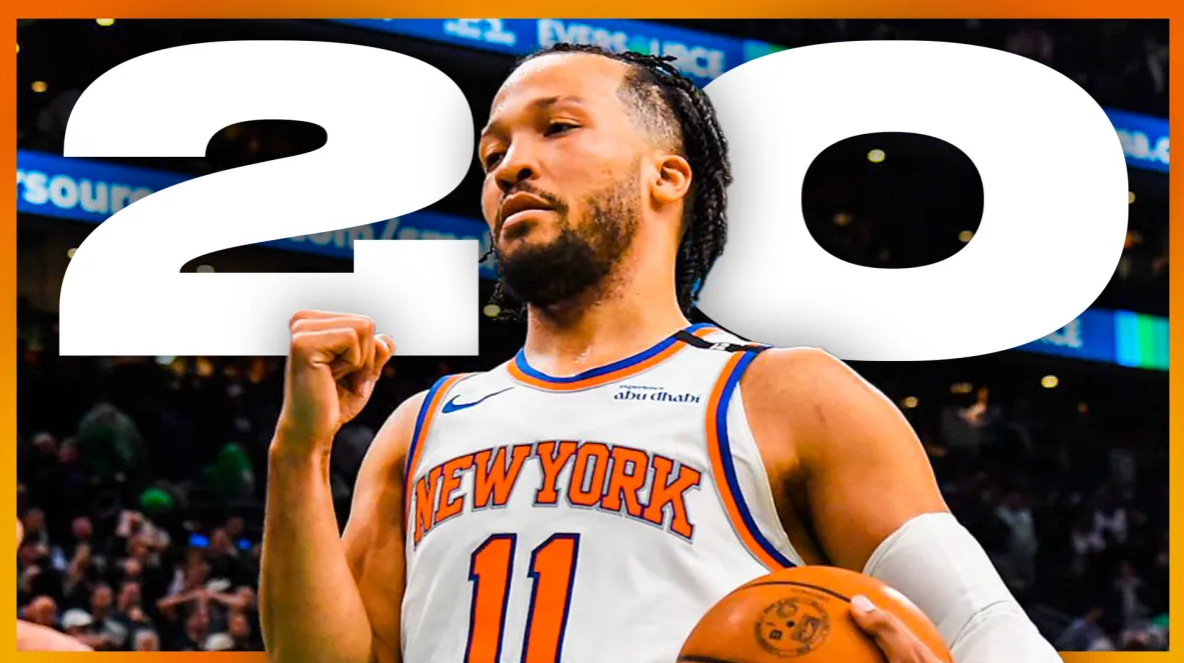
On Opening Night back in October, the New York Knicks and their completely revamped roster traveled to Boston to face the defending champion Celtics. Donte DiVincenzo, Julius Randle and Isaiah Hartenstein were out; Mikal Bridges and Karl-Anthony Towns were in. Boston eviscerated the Knicks, exposing the Knicks’ lack of cohesion (particularly on defense) in contrast to their well-oiled machine of an offense. While Boston would coast to the East’s second seed, the Knicks struggled through ups and downs en route to the third, the lowlight their 0-10 record against Boston, Cleveland, and Oklahoma City, many of which were blowout losses.
When the teams were set as second-round opponents, it seemed very difficult to envision the Knicks doing the unthinkable and dethroning the Celtics. 96 minutes of basketball later they are 96 minutes from doing just that. In a script bearing an eerie resemblance to Game 1’s, the Knicks made a dramatic comeback from 20 points down in the third quarter, buoyed by tough defense from Bridges, Mitchell Robinson and OG Anunoby early, then pushed across the finish line late behind more clutch offense from Jalen Brunson.
After Game 1, much of the national chatter focused on Boston’s uncharacteristically poor 3-point shooting, making just 15 of an astronomical 60 (!) attempts. Even with that, it took a dramatic comeback and overtime for the Knicks to steal the win. Their fans would have been happy to come away with a split on the road, the main objective for any road underdog in a playoff series. And I’d be lying if I said I didn’t feel a tiny bit of relief that no matter what, at least the Knicks would avoid a sweep. Meanwhile, other NBA fans seemed to be saying, “That was a gritty performance from the Knicks, but normal service will resume quickly.” It certainly seemed that’d be the case early on.
The Knicks generated solid shots but could not get any to fall. They didn’t let go of the rope on defense, continuing to switch screens and force the Celtics to score in isolation. Nevertheless, the home side jumped out to a 16-4 lead and would hold the Knicks to a season-low 13 in the quarter. It would undoubtedly have been much worse if not for the efforts of one Mitchell Robinson.
As the Knicks floundered on offense, Robinson repeatedly altered the C’s point-blank looks at the rim, muscled his way for offensive rebounds and even finished two dunks off of moderately difficult catches (!). The Knicks found themselves down 11, but all things considered it felt somewhat encouraging that they were still in the game.
Robinson continued to impact the game in the second quarter as KAT came alive with multiple old-fashioned 3-point plays (but if you’re reading this, Karl-Anthony, it’d be really nice if you took more of the newfangled threes, too). The Celtics once again resorted to “Hack-a-Mitch,” forcing Thibodeau to remove Robinson and then capitalizing by attacking the Knicks on the glass. Payton Pritchard got hot from three and for some time it looked like the Celtics were on the verge of blowing things open.
But Anunoby and Bridges continued to harass the Celtics’ wings on defense, and every time the Celtics started to create some space there’d be Hart flying in for a layup or Robinson saving a lost possession with an offensive rebound. The Knicks reached the half trailing 50-41; once again, all things considered, an acceptable deficit. Of course, third quarters have been quite an adventure for these Knicks in the playoffs, and the trend continued.
After having so much success through six quarters switching and playing aggressively on ball screens, the Knicks inexplicably went to drop coverage with Towns repeatedly in the third quarter, where he was torched mercilessly by Jayson Tatum and Jaylen Brown. This got the Celtics into a rhythm, and the beautiful ball movement and 3-point shooting that’s their M.O. returned, along with continued success on the offensive glass.
(As an aside, it is unclear if the drop coverage was a Thibodeau directive or Towns failing to execute the coverage; Thibodeau was visibly upset with Towns and benched him midway through the quarter, indicating it was likely the latter.)
Meanwhile, the Knicks could not get out of their own way, repeatedly turning the ball over. Brunson in particular played well below his standard, and all of a sudden the Knicks found themselves down 20. Again. In Game 1 they trailed 75-55, requiring a miraculous comeback. Down 73-53, surely lightning wouldn’t strike twice? A couple of thunderbolts from one Deuce McBride presaged the storm to come.
McBride, who’s struggled from the field for much of these playoffs and at the rim all season, pushed the ball off a rebound and threw down a monster tomahawk dunk that seemed to awaken the Knicks. With Robinson back in, the Knicks got back to switching and mucking up the Celtics’ offense, while Hart continued with the hustle and timely buckets. Anunoby threw down a vicious poster dunk on Derrick White that was controversially called a charge but seemed to keep the Knicks’ energy high. I remember telling myself Just get it to 12 by the end of the third.
The Knicks obliged, with McBride cashing in a wide-open three off a Brunson assist. The stage was set for drama again, but the Knicks would need a lot more on offense, particularly from their stars. Brunson had struggled to make shots all game; Towns was up and down, alternating brilliant post-ups and shotmaking with inexplicable turnovers. Anunoby, aside from the dunk, had been a no-show on offense, missing several jumpers badly. And Bridges hadn’t scored a single point. Robinson had been arguably their best player, but he could be played off the floor by intentional fouls. The Knicks had competed, particularly on defense, to keep the game within reach, but it felt like they were hanging on by a thread. Something would have to change.
Bridges would answer the call first, hitting midrange jumpers, slashing to the hoop for a gorgeous extended-arm finish in traffic and hitting movement threes en route to 14 fourth-quarter points.
Robinson continued to be a pest on both ends while New York continued to pressure Boston. Nevertheless, the Knicks couldn’t string together enough stops and buckets to close the gap; Boston even pushed the lead back up to 16 points in the fourth. Brunson checked back in with less than eight minutes to go and the Knicks down double-digits. Could Captain Clutch save the day again?
As he has all season, Brunson proved that whatever happens in the first three quarters, the fourth belongs to him. But he didn’t force the issue. He continued to push the pace, generating ball movement and trusting his teammates. On the other end, the Celtics went completely cold. When they launched from distance, the ephemeral 3-point shot would not fall for them; when Tatum and Brown attacked the paint, they found several bodies waiting (often one rather large one, in the form of Robinson). Down 86-77, the Knicks made their run.
Hart corralled the type of offensive rebound only he could get and in one motion flipped it to Brunson, who sunk a three. The Celtics continued to misfire, including Tatum missing a wide-open corner three after Al Horford knocked Brunson down near the hoop and likely would have had an open layup if Tatum had passed to him. Hart hit a clutch floater off a nice slash, the type that’s become a staple of his game, to cut the lead to four. It was at this point, with the Knicks down 86-82, that Celtics coach Joe Mazzulla made a fateful decision.
With Boston having committed only one foul and less than three minutes remaining, he instructed his players to intentionally foul Mitch three times with the Knicks inbounding from halfcourt. Unfazed, Thibodeau did not remove Robinson until the Celtics had used up all their extra fouls to give, at which point the Knicks were in the bonus the rest of the fourth. Then, out of the inbounds, a brilliant play design sprung Brunson open in the corner, where he drew help and found the (again) cutting Hart. Hart missed a contested layup at the rim, but having drawn the help defender Towns was left all alone for an easy putback, on which he was fouled. KAT sunk the free throw and suddenly the Knicks were only down a point. After one more stop, the Clutch Player of the Year did what he does.
Brunson put the Knicks ahead with a gorgeous, one-legged Dirk Nowitzki-esque fadeaway, then swooped to the hoop in transition to finish with his off-hand around the trees, extending the lead to three. But the Celtics weren’t done, cutting the lead to one again with a Tatum layup. After Brunson missed a 3-pointer, they had a chance to take the lead with 24 seconds left. Robinson substituted back in for defensive purposes.
Instead of holding for the final shot, Mazzulla had Tatum inbound from under the basket. He immediately got the ball back, and with Robinson waiting at half court and Anunoby picking Tatum up, the Celtics used Horford to screen OG, giving Tatum a head full of steam and tons of space to blow by Robinson for the go-ahead dunk.
If there was a silver lining, it was that the Celtics scored so quickly there were still 18 seconds left – not ideal, but certainly preferable to waiting on a Tatum buzzer-beater. The Knicks worked the clock, with Brunson beating Holiday to the paint and forcing a foul. He calmly sank both free throws, and with 10 seconds left the Knicks were one stop from a commanding 2-0 lead.
Mazzulla elected not to use his final timeout, calling the same play for Tatum to go the length of the court as he had on the previous possession. This time, the Knicks were prepared. Anunoby did not pick up Tatum full-court, with he and Robinson waiting at the 3-point line instead of halfcourt this time. This shrunk the space for Tatum, and after Robinson switched onto him he lost his handle momentarily. Forced away from the middle to the side, Tatum drew Anunoby and Bridges in help. From the left side, he saw Brown come open at the top of the arc and tried to pass the ball, but as he did in Game 1 Bridges called game, intercepting the pass and throwing the ball up as time expired to preserve another improbable comeback. What. A. GAME!
Notes
This season is quite likely the most scrutiny Thibodeau has faced coaching the Knicks, if not of his entire career. In previous seasons, it was understood that the Knicks were still building toward contention. But with the trades for Bridges and Towns the chips were all-in and the expectations were sky-high. I’ve been highly critical of Thibodeau much of the season. He prefers to have a rim protector in the game at all times and wants to win by limiting turnovers, winning on the offensive glass and playing tight defense. But this roster didn’t seem to be built for that.
Towns is a terrific offensive player and the Knicks have shooters and secondary creators to surround Brunson with, yet the team has often played at a slow place and devolved into isolation offense (with great results, because Brunson is Brunson). In the Pistons series, this seeming mismatch between roster strengths and the coach’s preferred style seemed to show through. The Pistons knew who they were: a rugged defensive team with great athletes and a lone offensive conductor. The Knicks, at times, felt lost. But I (and others) likely underestimated the process and time it takes for a team with so much roster turnover to find and craft its identity. And sure enough, the Knicks seem to have built one, with the coach meeting the team halfway.
Against the Celtics, the Knicks have abandoned the drop coverage that left Towns (and often Brunson) in no-win situations, living with switches and daring the Celtics to beat them in isolation. On offense they’ve pushed the pace, getting into sets early with purpose and sharing the rock. And Thibodeau got the rim protector he’d missed all season in Robinson.
He’s coached a wonderful two games and forced the Celtics to play on his terms, pushing all the right buttons at the right times. Before the series, if you told me Thibodeau would outcoach Mazzulla I would have been very skeptical. And yet that’s what’s happened. Thibodeau deserves all the credit in the world, and any concerns that may have been raised about his job security now seem laughable, regardless of what happens the rest of the series.
While one of these teams seems to be growing into a new identity, the other may be feeling trapped in theirs. The Celtics are known for spamming threes; they don’t play a single player who can’t make them. But I’ve felt a lot of that talk around the Celtics this season has missed some nuance. In a way, they’ve been given both too little credit and too much.
When people say, “The NBA game is boring; all teams do is shoot threes,” that neglects just how important the way those threes are generated is to the process. Yes, the Celtics have a bevy of talented shooters, but the beauty of their offense is their ability to get teams into rotation and swing the ball until they get the best shot possible, with every player making lightning-quick decisions. But the Knicks have flipped the script.
By switching ball screens and living with mismatches, they’ve taken away the Celtics’ ball movement and forced them to win one-on-one matchups, even against limited defenders like Towns, Brunson and Cameron Payne. As talented as Tatum, Brown and White all are, that’s vastly preferable to them pinging the ball around the perimeter like a pinball machine.
As a result, the Celtics have not looked the same. Yes, they have generated a ton of threes, many of them open. But as Knicks fans can attest through some of our woeful shooting nights, there is a difference between a three coming off a stagnant isolation possession, where a shooter is flat-footed and has to launch quickly, versus an open three generated by fluid offense in which the ball finds a ready shooter after multiple passes. The Celtics are built to win with the latter. They’re talented enough to win with the former, but it’s not their natural identity.
The other part of the Celtics’ struggles has come in the form of the duo that is finally living up to its Wingstop nickname. Bridges and Anunoby have played like First Team defenders most of the playoffs and were brilliant last night, combining for seven steals, relentlessly fighting through screens, contesting shots and channeling Olivia Newton-John.
How fitting for Bridges, a player under the microscope since arriving in New York because of the cost to acquire him, to close out these games in the manner he has. How fitting for Bridges, a player people have called “soft”, who’s been criticized for a perceived lack of physicality, to literally rip the game from the reigning Finals MVP Brown’s hands in Game 1, then block Tatum’s pass to Brown to seal Game 2. The vision for this team is clearer now than it was all season: Robinson protecting the rim, Anunoby and Bridges swarming the perimeter and Hart plugging all the remaining gaps as needed, while Brunson and Towns force teams into the near-impossible task of defending them both. The scary thing is neither Brunson nor Towns has put up a truly great game, yet the Knicks are still up 2-0 going back to Madison Square Garden.
Make no mistake: Mitch was the most impactful player on the floor, even in a game in which he did this. Six points, eight rebounds and three steals do not even come close to telling the story, nor does his game-high +19 (a stat Mazzulla noted after the game). The champs’ willingness to trade putting the Knicks in the bonus for forcing Mitch from the game – while dubious – reflects the effect he was having on the game.
With the Knicks switching everything and taking away clean looks, the Celtics would have to attack Robinson in the paint. And while they mitigated their shooting woes by crashing the offensive glass, this is not a great option with Big Mitch ready to corral anything in his vicinity. It’s interesting to look back on now, but before the season many Knicks fans were skeptical that Robinson could stay on the floor against a five-out offense. He’s struggled against stretch-5s in the past (particularly Kristaps Porziņģis, limited due to illness) and you’d ideally keep as close to the rim as possible at all times. Or so you’d think. But that point of view may have missed some things.
For one, while Robinson might not be the spry uber-switchable teenager he was his rookie year, he’s hardly “food” when switched on a perimeter player, particularly bigger wings like Tatum and Brown. I think this applies to a lot of bigs. We remember Luka Dončić and James Harden draining stepback threes against Rudy Gobert in space, but often forget that 99% of the time (and for 99% of players) you don’t really want to be taking that shot – even from distance – with a 7-footer contesting.
Even when a smaller player gets a step on Mitch on a drive, his length and long strides allow him to close down the space and recover. Mitch is the sole player remaining from the first year of the Leon Rose era, despite often featuring in trade rumors, struggling with injuries and his offensive limitations. It’s a testament to how hard he’s worked to see the talented but extremely raw, foul-prone 19-year-old who got by on athleticism but often didn’t know what he was doing turn into a defensive quarterback and rebounding monster heavily impacting a series against the defending champs. We love you, Mitch.
It’s a shame it always feels like I get to the end of recaps before I talk about Hart, but that reflects what makes him so important. Amidst Brunson’s heroics, Towns’ imposing scoring threat and the defense being played by Mitch and the wings, Hart can be an unsung hero at times, with many of his contributions not showing up in the box score. But if you watched the game his impact was loud, and yesterday it showed on the stat sheet too.
In a game featuring Tatum, Brunson, Towns and Brown, each an All-NBA honoree, it was Hart who led all scorers with 23. He confidently took and stook 3-pointers when Boston left him open, contested at the rim, swiped for steals and pushed the pace to set the Knicks up for high-percentage opportunities. Brunson has been a transcendental player for the Knicks, Towns is a walking mismatch and Wingstop provides two-way havoc, but the jack-of-all-trades Hart and Mount Mitch have in many ways been the engine that kept this team on the tracks when it looked like things might go awry.
I want to give a quick shout-out to McBride. Shots fall sometimes, and sometimes they won’t. But the energy he brings is constant. Yes, it would be nice if he were more dynamic off the dribble. Yes, he needs to stay on his feet on pump fakes. But he is a ball of energy that never lets up on opposing defenders and provides vital spacing for Brunson and the Knicks’ offense. His dunk in the third quarter felt like a defibrillator for a Knicks team that looked on the verge of flatlining.
To end, let’s reflect on this: I don’t think it’s an overstatement to say these are the two biggest wins the Knicks have had since their run to the 1999 Finals. How poetic for them to come against the Celtics, who over the literal entirety of NBA history have been everything the Knicks have not. The Celtics have 17 titles, at least one in nearly every decade. The Knicks have been perennial underachievers despite all the advantages that come with playing in a big market. The Celtics are the defending champions and play what many consider peak modern basketball; the Knicks and their coach have been criticized (even by me) for being stuck behind the times, not taking enough threes, playing too fewer guys too many minutes.
Yet here they are. Here they FREAKING are! Game 3 at the only Garden and what’s sure to be a raucous crowd awaits. Perhaps so does history. Let’s go Knicks!