

Two formerly out-of-the-rotation guards are leaving their stamp on the playoffs.
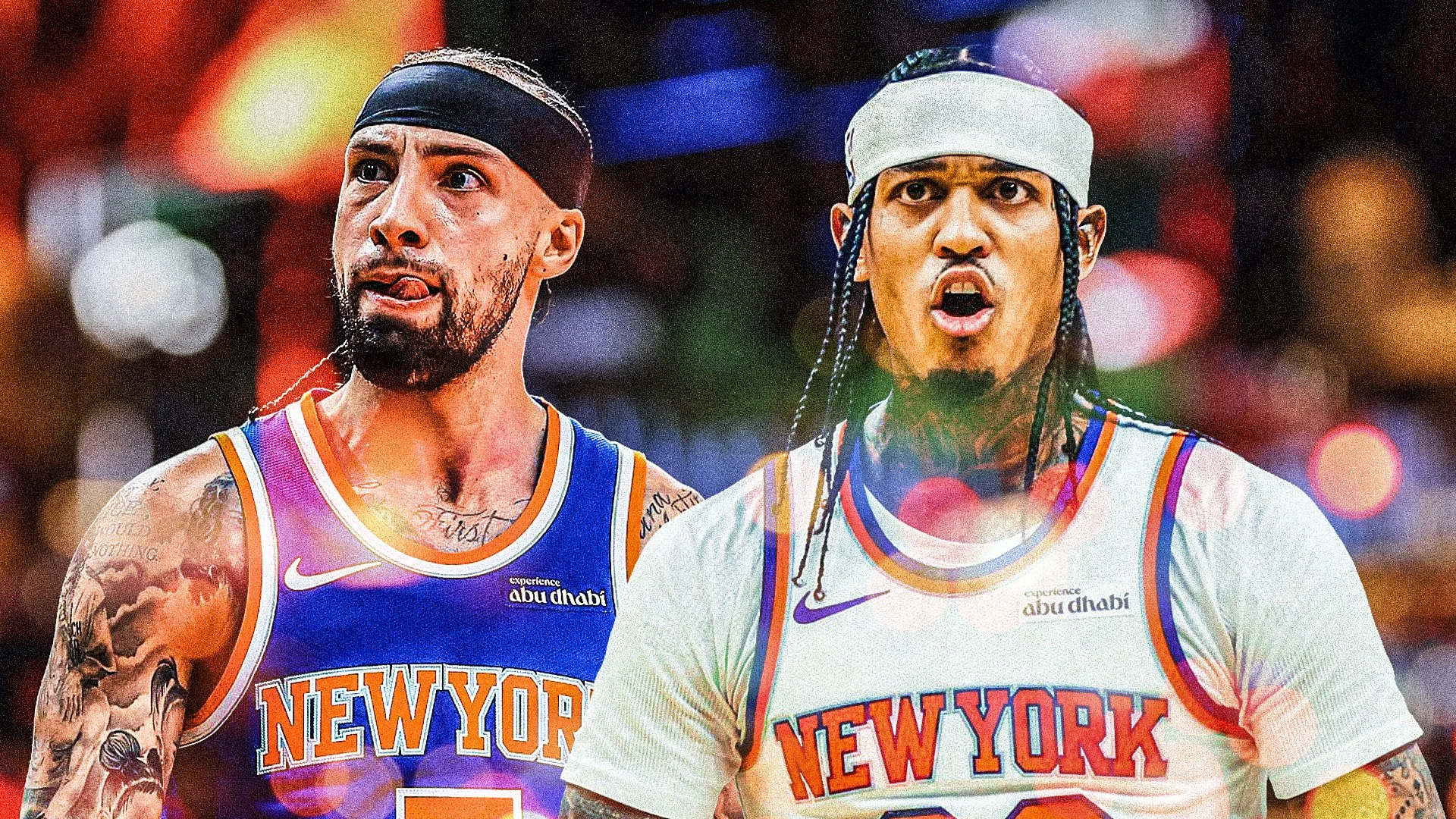
Jordan Clarkson signed a one-year, $3.6 million deal with the Knicks in July with the idea that he’d provide scoring off the bench. Clarkson was entering his 12th NBA season and had won Sixth Man of the Year as recently as the 2020-21 season.
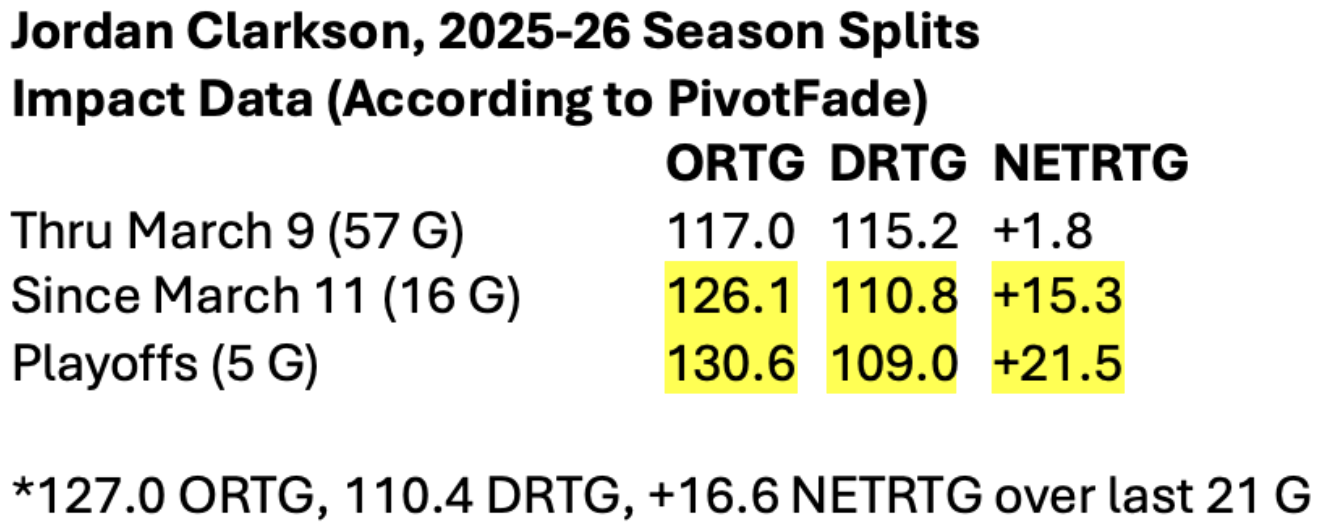
However, through March 9 of this year, the Knicks were barely a positive in Clarkson’s minutes, sporting a +1.8 net rating (NETRTG). For a 14-game stretch spanning a month, Clarkson had found himself out of Mike Brown’s rotation, only seeing time when his teammates were sitting or in garbage time.
During that 14-game span, Clarkson had six games where he sat entirely and played fewer than eight minutes in five other games. Add that all up and he was a non-factor in 11 of those 14 games.
However, Brown let him back into the rotation when the Knicks needed a spark in their comeback win in Utah on March 11. He was 10-15 (66.7%) from the field with 27 points in the team’s 134-117 win in his homecoming to Salt Lake City, Utah.
Since rejoining the Knicks rotation, Clarkson has seen an extreme change in his shot diet.
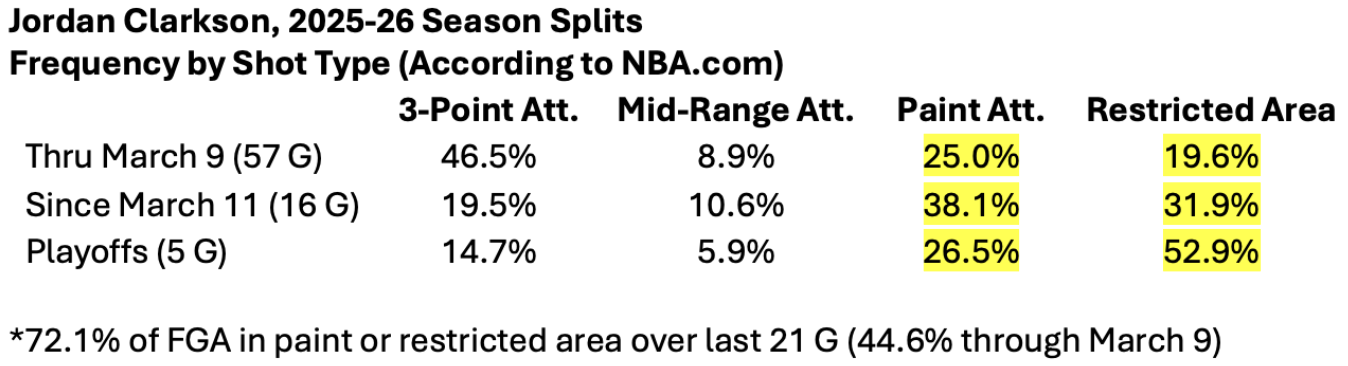
Through March 9 (57 games), 46.5% of his shots were 3-pointers and only 44.6% of his shots were in the paint or restricted area. In his final 16 regular season games, dating back to March 11, he saw his 3-point attempt frequency dip to 19.5% with 69.9% of his shot attempts coming from the paint or restricted area.
During the playoffs (five games), only 14.7% of his field goal attempts have come from beyond the arc, as 79.4% have come from the paint or restricted area — that’s 72.1% over his last 21 games, dating back to March 11.
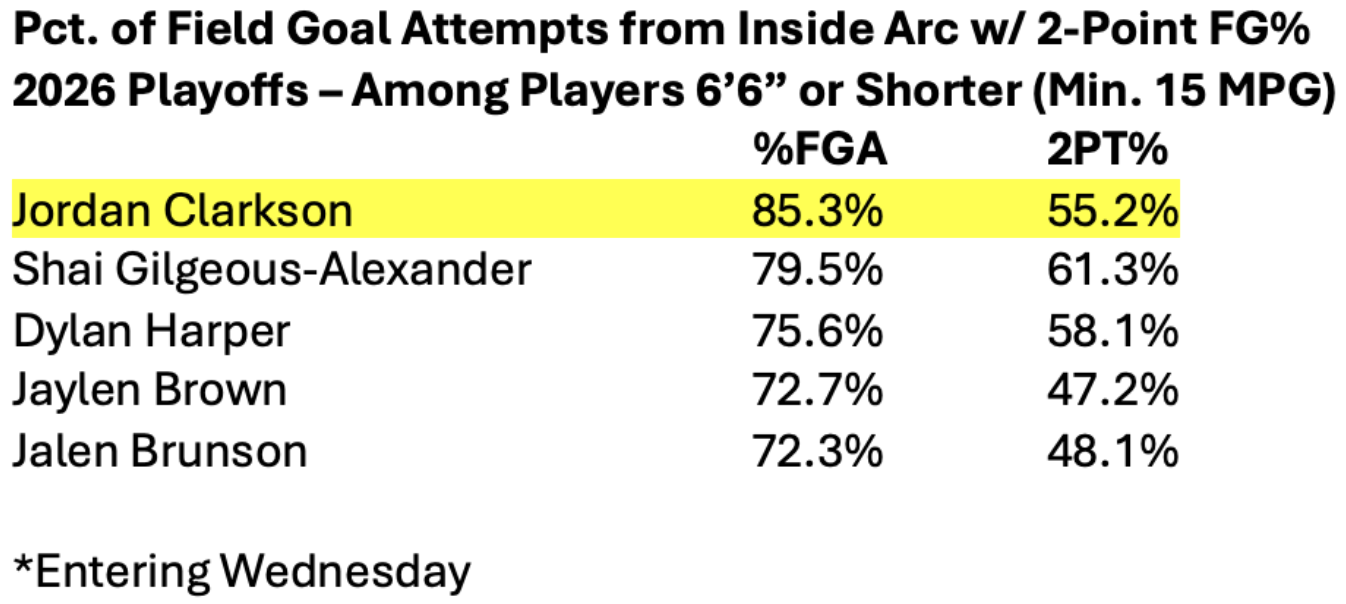
No other player during the 2026 playoffs shorter than 6-foot-7 has had a higher percentage of their shots come from inside the arc than Clarkson (85.3%), entering playoff action on Wednesday. The next closest player is Shai Gilgeous-Alexander (79.5%).
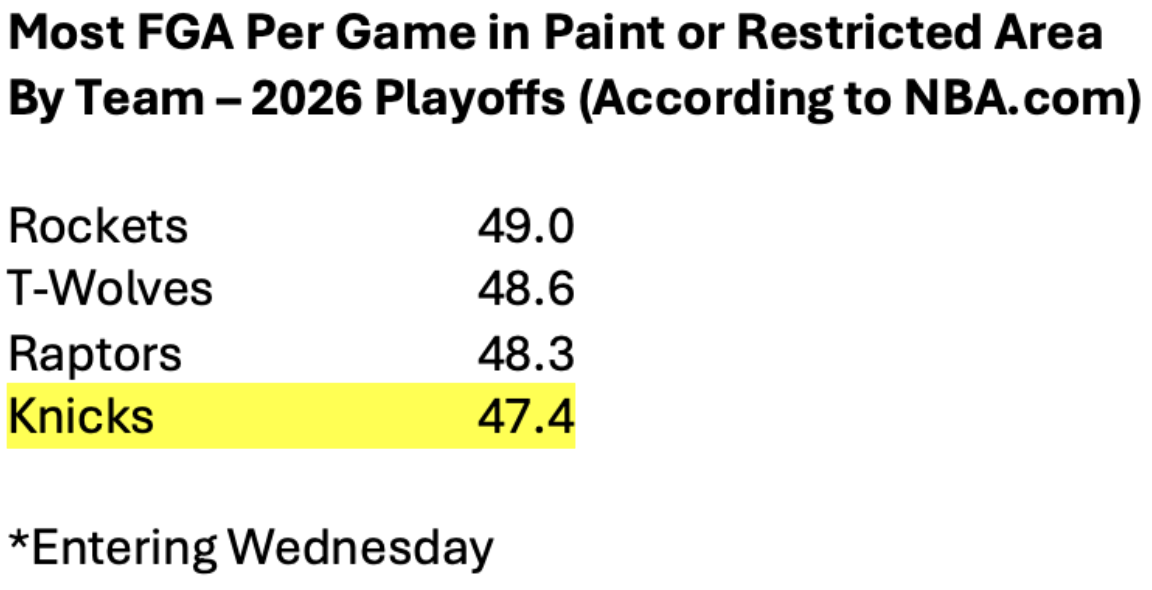
Clarkson has helped the Knicks rank in the top four of most field goal attempts per game in the paint or restricted area. Only the Rockets (49.0), T-Wolves (48.6), and Raptors (48.3) have more shots per game in the paint or restricted area than the Knicks (47.4).
As mentioned earlier, both the Knicks’ offense and defense through March 9 didn’t benefit from Clarkson being on the floor, sporting a 117 offensive rating (ORTG), 115.2 defensive rating (DRTG), and +1.8 NETRTG in his minutes. Over his final 16 regular season games after rejoining the rotation on March 11, he posted a 126.1 ORTG, 110.8 DRTG, and +15.3 NETRTG.
Clarkson has made even more of an impact in his time on the floor in the playoffs vs. the Hawks, registering a 130.6 ORTG, 109 DRTG, and +21.5 NETRTG. Over his last 21 games since March 11, the Knicks have a 127 ORTG, 110.4 DRTG, and +16.6 NETRTG with Clarkson on the floor... that’s a far cry to how they fared with him out there to start the season.
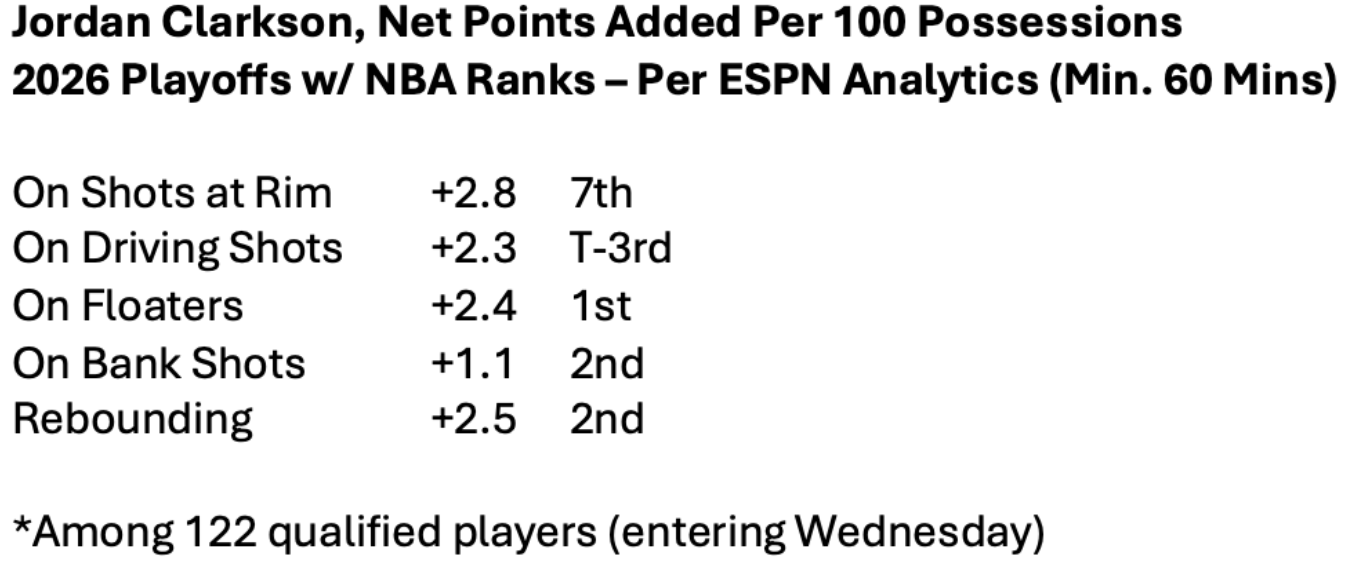
Among 122 players who have played 60-plus minutes in the 2026 playoffs, Clarkson has been one of the best offensive players inside the arc per 100 possessions, according to ESPN Analytics, and he’s added great rebounding value as well.
Clarkson added +2.8 points per 100 possessions on shots at the rim (seventh in the NBA), +2.3 points per 100 possessions on driving shots (tied for third in the NBA with Jalen Brunson), +2.4 points per 100 possessions on floaters (best in the NBA), and +1.1 points per 100 possessions on bank shots (second in the NBA). He’s also added +2.5 points per 100 possessions in rebounding... second only to Neemias Queta (+2.6) entering Wednesday’s games.
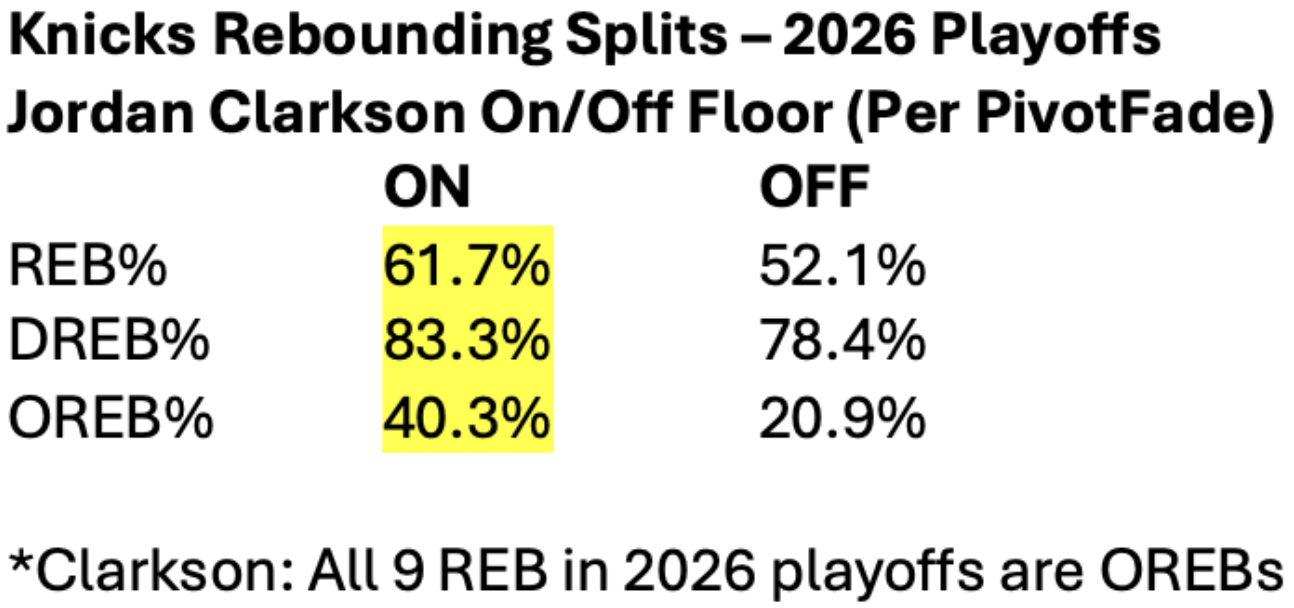
Clarkson has been a big help on the boards for the Knicks in these playoffs. They’re better at rebounding all around with him on the floor, compared to him off the floor. They’re rebounding 61.7% of shots with him on the floor (52.1% off), while rebounding 83.3% of defensive misses (78.4% off) and 40.3% of offensive misses (20.9% off).
All nine of Clarkson’s rebounds in the playoffs have been offensive rebounds — including five offensive rebounds in their Game 2 loss. He doesn’t have a rebound over his last two games, but that doesn’t change things. We saw Clarkson have a stretch near the end of the regular season on the offensive glass that saw him pull in at least one offensive rebound in nine consecutive games.
And we can’t forget Clarkson’s magical healing powers…
Like Clarkson, Jose Alvarado saw his spot in the rotation vanish near the end of the season, as Brown preferred Deuce McBride and Landry Shamet’s ball-handling and shooting over Alvarado’s ball-handling and defensive pest abilities. A lot of that had to do with him not taking advantage of defenses not respecting him as a shooter.
The Knicks traded for Alvarado in early February, and he made an instant impact in Boston on Feb. 8, making two threes, registering two steals and a block, while posting a +13 plus-minus. Right before the All-Star break, he then wowed the traveling Knicks faithful in Philadelphia, making eight threes off the bench and recording five steals.
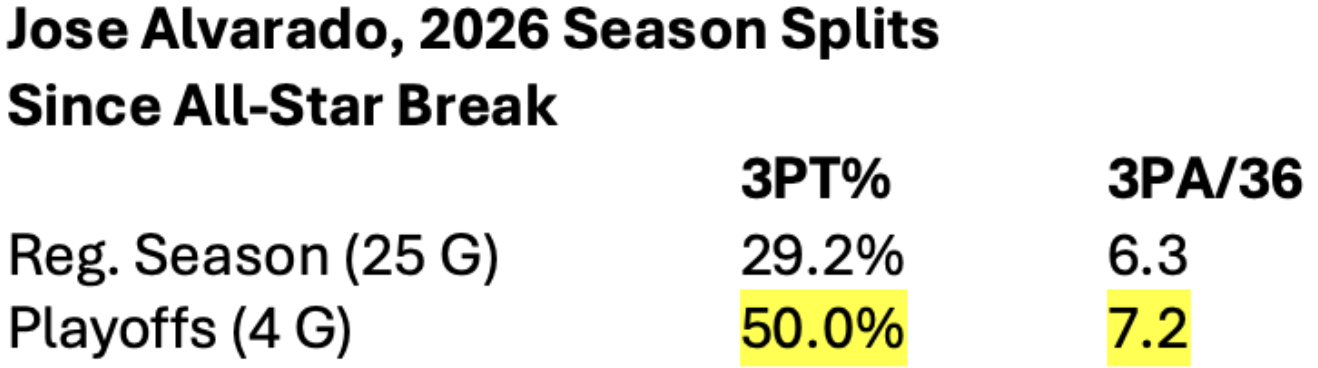
However, he struggled with his 3-point attempts over his final 25 games of the regular season, shooting 29.2% on 6.3 3-point attempts per 36 minutes, and he found himself out of Brown’s rotation and only available in emergency situations.
An emergency presented itself in Games 2 and 3 when Brown entrusted Alvarado over the likes of Shamet. Though he was 2-6 from the field in those games, he proved to Brown that his aggressiveness on the offensive end had returned to go along with his special defensive traits. In Games 4 and 5, he was 4-6 from three, making him a 50% 3-point shooter for the series on 7.2 attempts per 36 minutes.
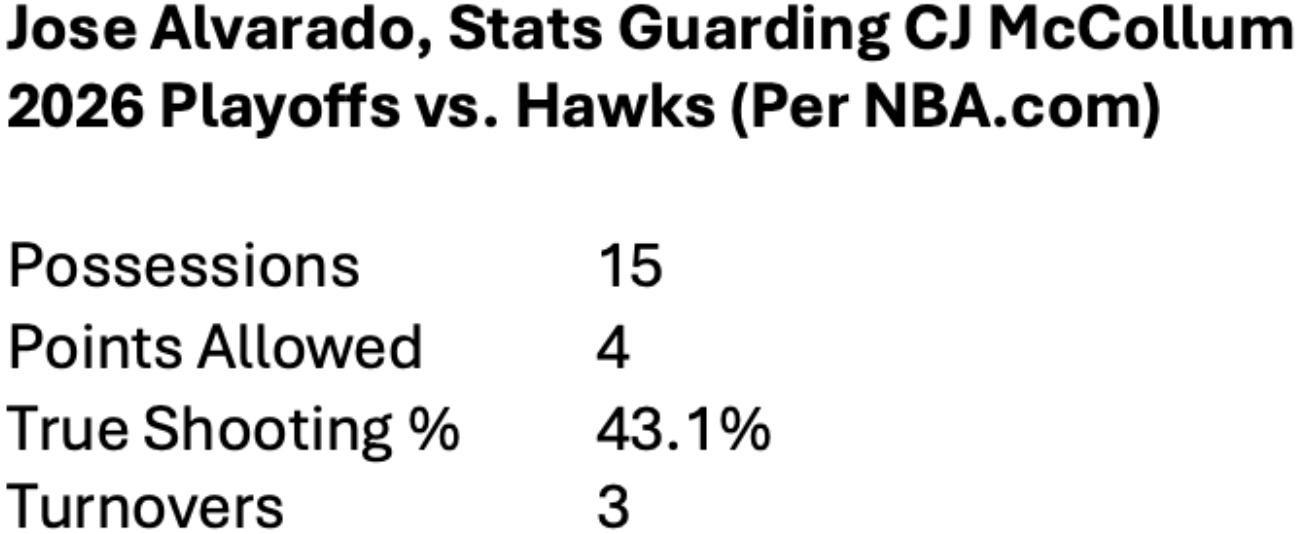
On the defensive side, he’s proved to be a pest for the Hawks. CJ McCollum had blasted the Knicks’ defense for 29 points per game on 63.1% true shooting percentage through the first two games. Alvarado has helped the Knicks weather the storm since. In 15 possessions guarding McCollum, Alvarado has held him to just four points on 43.1% TS%, along with three turnovers.
Over his last three games vs. the Knicks, McCollum is averaging 15.3 PPG on 46.3% TS%.
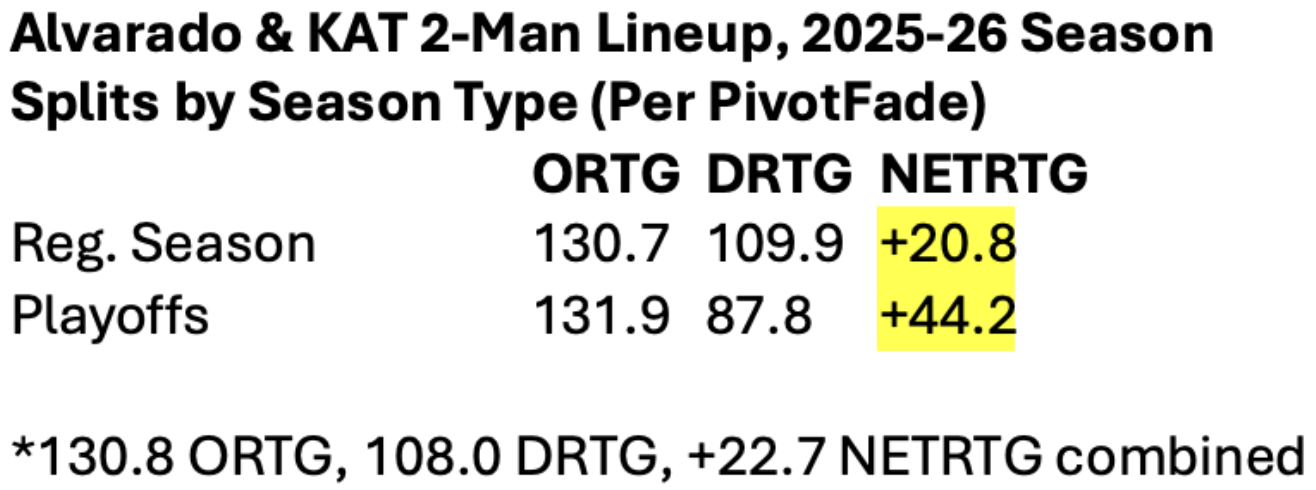
Since joining the Knicks, Alvarado has had great synergy playing alongside Karl-Anthony Towns — a lot of those minutes coming with KAT needing to be a strong first option. In the regular season, the duo played a total of 531 possessions together on the floor, recording a 130.7 ORTG, 109.9 DRTG, and +20.8 NETRTG. In 47 possessions of that two-man pairing in the playoffs, the Knicks have a 131.9 ORTG, 87.8 DRTG, and +44.2 NETRTG.
Overall, that two-man lineup boasts a 130.8 ORTG, 108 DRTG, and +22.7 NETRTG in 578 possessions.
Keep in mind: in the five games Towns played in from April 3 to April 18, we didn’t see Alvarado share the floor with him in four of those games, due to Brown shortening his rotation.
Alvarado and Clarkson have proved to be an excellent pairing together off the Knicks’ bench so far these playoffs, but they work best when they’re together and not apart. In 43 possessions with both Alvarado and Clarkson on the floor, the Knicks have a 144.2 ORTG, 84.8 DRTG, and +59.4 DRTG. When one of them is on the floor and the other is sitting, the Knicks have a 115.8 ORTG, 113.6 DRTG, and +2.2 NETRTG (133 possessions).

There’s a good lesson to be learned here for the young athletes out there. Just because you fall out of favor doesn’t mean you can’t find yourself back in action when the pressure is at its highest... you just have to be ready, whether that’s evolving your game as a veteran (Clarkson’s shot diet and rebounding) or seizing an opportunity by returning to your roots (Alvarado’s aggression on both ends).