

Knicks Picks: A Pick 31 NBA Draft primer for Knicks fans
The Knicks hold one of the most desirable selections in the salary-crunched NBA, the first pick of the second round. Could they find an instant contributor for their title defense?
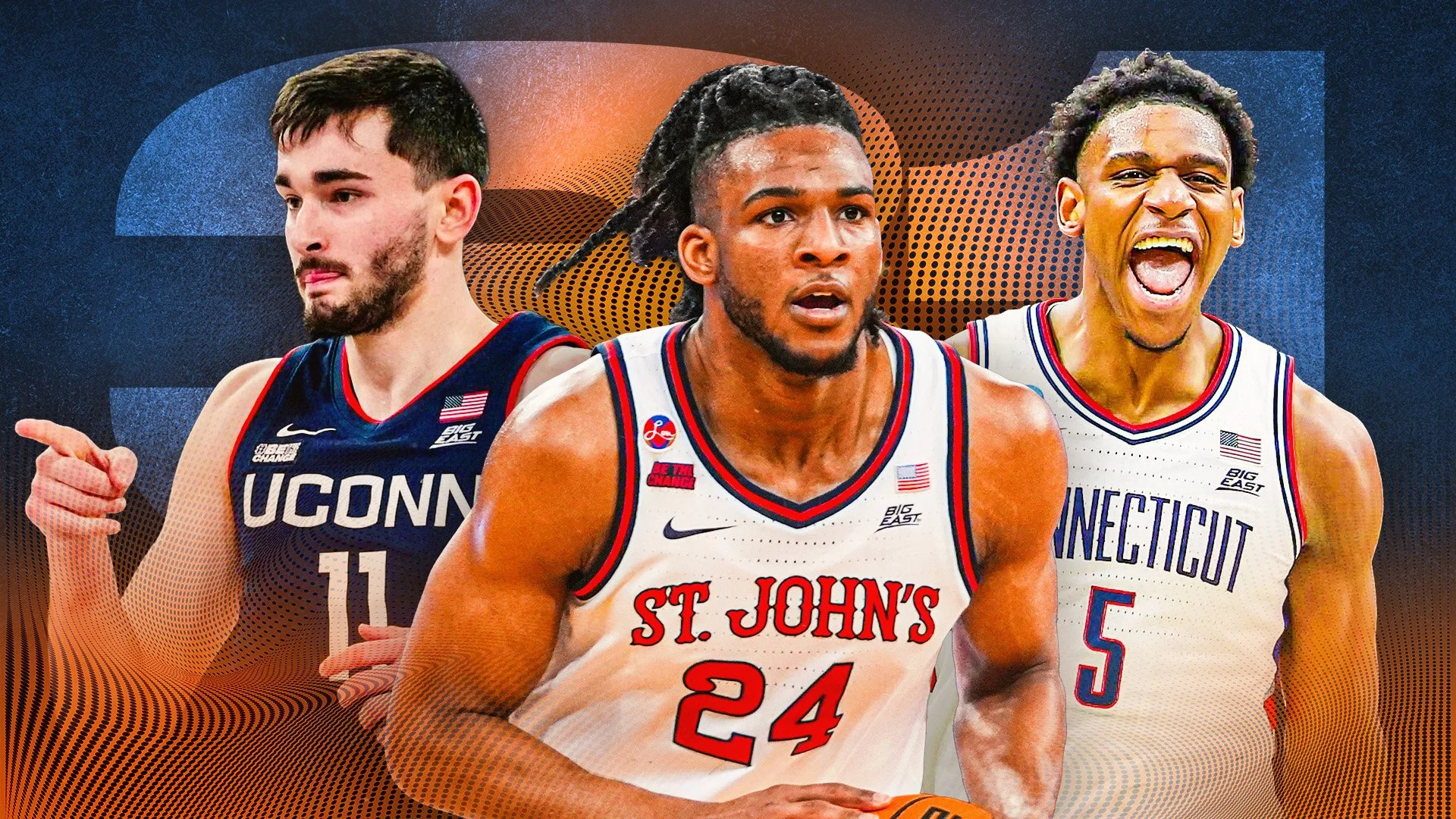
With the 31st pick in the 2026 NBA Draft, the New York Knicks select…
The Knicks own the first pick in the second round. For the Knicks, a shrewd team constantly searching for ways to shrink their budget for maximum flexibility, this is an ideal draft position. It essentially offers the same talent as the first round, with the benefit of avoiding the higher guaranteed salaries that come with first-round selections.
Knicks fans can also finally stop wondering if they’ll get that protected Wizards first-round pick from the Ousmane Dieng trade in 2022. While they won’t get Darryn Peterson, AJ Dybantsa, or Cameron Boozer from that first overall Wizards pick that didn’t convey, they might get one of the below players in exchange for giving up Dieng three years ago.
In Leon Rose’s tenure, the Knicks have gotten great value out of early second-round picks in Miles McBride and Tyler Kolek. While a TON of players in this range returned to college for fat NIL checks, there’s still great value remaining. If the Knicks keep the pick, I trust them to draft a solid player here.
Again, using a consensus big board (with rankings as of June 15th), rather than my own, we can understand the draft range of different prospects according to the mainstream media. Here are the guys in this range that I’d most like the Knicks to take a swing at. And, of course, if you haven’t already, make sure to check out the first part of this series, where I detailed the players the Knicks could look at with their 24th overall selection.
Zuby Ejiofor
Senior Big, St. John’s
Consensus rank: 29
Stats: 16.3 PPG, 7.3 RPG, 3.5 APG
NBA Combine measurements:
Height (barefoot): 6’7.5”
Wingspan: 6’11”
Reach: 8’11”
Weight: 225 lbs
Max vertical: 38”
Zuby Ejiofor is already a New York City legend. As a two-time team captain at St. John’s University, he’s no stranger to Madison Square Garden. While St. John’s is based in Queens, they play their Big East Tournament home games at MSG. With the Garden as his backdrop, Ejiofor became a star, taking home the tournament’s MVP award and leading his team in points, rebounds, assists, and blocks, an astounding feat on a team with strong depth. That wasn’t all. He also earned himself the NCAA Kareem Abdul-Jabbar Center of the Year Award, the Big East Player of the Year Award, and the Big East Defensive Player of the Year Award while leading St. John’s University to their best March Madness finish since 1999.
But it’s not just his background that would endear him to Knick fans — it’s the hustle and heart that he plays with. If the Knicks draft him, he’d become an immediate fan favorite. Watching Ejiofor defend is often nonsensical. He’s a tweener — he has a standing reach that is often dwarfed by opposing centers. And yet, he’s a dominant rim protector. In the post, he plays with so much strength and balance with his low center of gravity that he’s a stop sign for bigs trying to jockey their way to deep post position, and he has the hops to get up and block or alter shots. On the perimeter, his big, wide body looks like a blow-by in waiting. And yet he’s FAST. He can chase guards full-court or stick with their counters off the dribble to contain drives like few other bigs are able to. Ejiofor’s versatility is only helped by his never-ending motor. He’ll switch onto all five players in one defensive possession, sprinting between coverages and communicating with teammates every step of the way.
Ejiofor has a ton of offensive skill as well. He’s a great passer who often operated as St. John’s’ point guard this season, passing to cutters from the break or elbow, or back out from the post to 3-point shooters. His areas of improvement are finishing at the rim and 3-point shooting, though his finishing should stand to improve on lower usage and surrounded by better playmaking, which any NBA team would offer more of than his St. John’s team this past season. And while he hasn’t made a ton of threes, his touch is apparent and it’s not a wild idea that he’ll develop into a respectable spot-up threat. That development, along with his other skills, would make an elite role player with the ability to play regular season NBA minutes quickly.
Ejiofor is a graduating senior with no more NCAA eligibility left, but the way he has dramatically improved year over year shows that he has even more ability to tap into as he continues to develop. It’s rumored that the Knicks like him, and they’ve already had him in for a workout. If they miss out on Jayden Quaintance at 24, I could see them prioritizing Ejiofor by either taking him at 24, trading down from 24 to net some future assets and taking him later in the first, or trying their luck getting him at pick 31. It’s easy to see why they’d want him.
Player comparisons: Onyeka Okongwu, Collin Murray-Boyles, Trayce Jackson-Davis
Alex Karaban
Senior Forward, Connecticut
Consensus rank: 30
Stats: 13.2 PPG, 5.3 RPG, 2.4 APG
NBA Combine measurements:
Height (barefoot): 6’6.75”
Wingspan: 7’2”
Reach: 8’8.5”
Weight: 225 lbs
Max vertical: 33”
If you want to add even more winning pedigree to the Knicks next year, Alex Karaban is the guy for you. As a two-time NCAA Champion with the University of Connecticut, with another Finals appearance this past year, Karaban is the winningest player available. While he isn’t a star offensive or defensive player, he’s a forward-sized elite shooter and intelligent glue guy who would fit on any team in the league in a complementary bench role.
Karaban wasn’t as elite shooting the ball in his senior season, but he’s still one of the best shooters in this draft. He isn’t the most versatile shooter and probably won’t be pulling up off the dribble or flying off of screens for his looks. Instead, he’s an elite spot-up and pick-and-pop shooter, which is largely how the Knicks get their 3-point looks. Earlier in his career, Karaban was just a shooter. That isn’t his story any more. He has become a strong slasher and passing has become a huge strength. He readily moves the ball within the flow of the offense, occasionally making high-level reads or threading the ball through tight windows. His IQ is now exceptional, having developed within Dan Hurley’s constantly moving offense for the past four seasons.
Karaban is far from a perfect player. He’s not an on-ball threat at all, with a limited driving game due to his poor handle and lack of midrange counters, something that the Knicks have heavily relied on their wings for. He’s also far from a fluid or explosive athlete, with stiff hips and slow twitch. He could really end up struggling to contain drives at the point of attack. Continuing to develop his athleticism could be the swing that makes or breaks his career.
With this in mind, Karaban obviously isn’t going to be another addition to the Wingstop core of OG Anunoby and Mikal Bridges, but he uses his size, length, and smarts effectively enough within a team defense. He’s engaged to know when to rotate or help at the rim and long enough with great hands to strip or block a surprising number of passes and shots.
As a baseline, Karaban will sprint to the corners and knock down threes, play well within a team defense, and make winning plays. With these sought-after skills and his accomplished resume, Knicks fans should be happy to walk away with him in the second round.
Player comparisons: Sam Hauser, Corey Kispert, late-career Nicolas Batum
Tarris Reed Jr.
Senior Big, Connecticut
Consensus rank: 31
Stats: 14.7 PPG, 9.0 RPG, 2.3 APG
NBA Combine measurements:
Height (barefoot): 6’9.75”
Wingspan: 7’4.25”
Reach: 9’2”
Weight: 264 lbs
Max vertical: 33”
If the Knicks foresee problems bringing back free agent Mitchell Robinson, selecting Tarris Reed Jr. may make the most sense as a cheaper alternative to their backup center dilemma. Reed was one of the best rebounders, shot blockers, and rim finishers in college basketball last season.
First and foremost, Reed is strong as an ox. His legs and chest are massive, and he weighed in at the NBA draft combine at 263 pounds, good for second-heaviest at the event. Looking at him, it’s all muscle, and he knows how to use it. He bodies entire teams to rip down contested rebounds. It’s impossible to move him in the post. He sets bone-crushing screens. His physical presence is simply undeniable.
Reed’s size and strength are far from the only athletic traits he brings to the table. Somehow, he’s also incongruously agile for his size. Few bigs have hips that can switch directions in such a flash, or feet so quick they become a blur when defending guards on the perimeter. He makes switchable defense look easy, and guards who target him with blow-bys or pull-ups are more often than not unceremoniously disrupted by Reed’s mobility and length.
What makes Reed truly special, though, is his ability to combine his physical attributes with his feel for the game. His development through his college career has been nothing short of remarkable. He was truly a horrendous playmaker through his two seasons with Michigan, but when he got to work under Hurley’s coaching, something fundamentally changed, and his feel for the game just clicked into place. Now, as a graduating senior, he has become one of the smartest bigs in this draft and plays with a level of feel that’s hard to teach. On the offensive end, he’s constantly screening: pick-and-rolls, fade screens for shooters, Gortat screens sealing off opposing bigs from contesting shots at the rim. He creates easy looks for teammates all over the court without ever touching the ball. It’s not just the feel that’s so impressive — he combines it with the technical ability to feed passes through tight windows to cutters and shooters.
While Reed will never be a go-to scoring option, he doesn’t need to be. His other contributions on the floor should allow him to impact winning at the highest levels. He has one of the highest floors in the draft and will likely make an impact as a rookie for whichever team drafts him. I would be shocked if he doesn’t have a long career in the league.
Player comparisons: Steven Adams, Isaiah Hartenstein, Xavier Tillman
Joshua Jefferson
Senior Forward, Iowa State
Consensus rank: 32
Stats: 16.4 PPG, 7.4 RPG, 4.8 APG
NBA Combine measurements:
Height (barefoot): 6’7.75”
Wingspan: 6’10.75”
Reach: 8’8.5”
Weight: 246 lbs
Max vertical: 33”
Every NBA team could use another forward with a dribble-pass-shoot-defend skillset. For teams that miss out on Cameron Boozer and Yaxel Lendeborg, Joshua Jefferson provides the closest imitation at this stage in the draft. He may very well be the best passer at 6-foot-8 or taller in the class, as he averaged more assists per game and a higher assist-to-turnover ratio than Boozer on similar usage. In the NBA, he’d be an elite dribble-hand-off and short-roll playmaker, able to sling passes to open shooters from any position on the floor. When he’s backing down an opponent in the post or even handling the ball in the pick-and-roll, his eyes are constantly scanning the defense for openings, and he feels the moment a defender collapses into a double team better than anyone. His decision-making is instantaneous, and his passes are consistently right in the shooter’s pocket for an open look. If he ends up on the Knicks, it’s not hard to envision Jefferson setting a screen for Brunson, getting a pocket pass in the short roll, and kicking it out to OG in the corner or to Karl-Anthony Towns spacing above the break. He would play best in a fluid offense designed for every player to drive closeouts and make the right read, like New York’s. He makes the most happen when he’s able to get a touch on the ball, even if he gets rid of it a split second later.
That brings us to his flaws that could limit his impact within the Knicks’ offense. Off the ball, he’s a good screener and decent cutter, but isn’t much of a shooter. He shoots them willingly, which, to be fair, is half the battle… but he doesn’t shoot particularly well. Some usual touchstone indicators like free-throw percentage (70% on 6.1 attempts per game this season) and 3-point volume(34.5% on 3.1 attempts per game at college distance) don’t paint the prettiest picture. Sometimes he gets hot from deep, but it’s more of a nice surprise than an expectation. He rarely takes corner threes, a necessity playing for New York, so for the Knicks, he’d function more as a big man than a wing or forward. In that context, though, he’s not an above-the-rim finisher, and his touch on layups was suspect this year, though he was often triple-teamed in the paint due to Iowa State’s lack of spacing. In a lower usage role and surrounded by shooters at the next level, he should see real improvements in those numbers. That being said, his offensive role would likely be more similar to Josh Hart’s than Anunoby’s, and Hart already brings up questions for the Knicks’ offense.
Jefferson has also been one of the most impactful defenders in the NCAA throughout his college career. He can effectively guard forwards and bigs, though he’s too slow to keep up with guards and quicker wings, and can be prone to blow-bys. He has the strength and grit to body up against bigs even though his standing reach and vertical are less than ideal. Few players put up defensive numbers better than his this season, much less while carrying the heavy offensive load that he was tasked with. He seems like a perfect candidate to be an overqualified role player at the next level.
Player comparisons: Kyle Anderson, Draymond Green, Grant Williams
Jack Kayil
20-year-old Guard, Alba Berlin (Germany)
Consensus rank: 41
Stats: 12.4 PPG, 3.0 RPG, 3.5 APG
Measurements (completed in Germany):
Height (barefoot): 6’3.5”
Wingspan: 6’5.75”
Reach: Not measured
Weight: Not measured
Max Vertical: Not measured
With the Knicks’ recent penchant for swinging on young European players (Pacome Dadiet, Mo Diawara, Ariel Hukporti), another could certainly be in the cards. Jack Kayil is one of the best international prospects in this draft class. He played on the German national youth teams with Christian Anderson and Hannes Steinbach and was key to Germany’s gold medal in the FIBA U19 tournament. Now, he’s a 20-year-old who just won the German Bundesliga finals with Alba Berlin against a veteran-laden Bayern Munich team. He’s not just a good rotational guy for Alba. He’s one of their best players, winning the league’s U-22 Player of the Year award and leading the team in usage and scoring while putting up their second-most assists per game. Just a few short weeks ago, Kayil was ranked in the 70s on the consensus board. Now that he has led his team to victory overseas, scouts and industry writers have taken notice. On June 15th, he was ranked 41st overall, and it wouldn’t be surprising if he rises further into the early 30s or even late first round.
Kayil is a combo guard with complementary playmaking skills at the next level. He isn’t a good enough floor general for a team to put the ball in his hands and have him run the show, but he doesn’t need to be. He does a bit of everything else well enough. He’s a great defender, a good shooter, and an active cutter, screener, and rebounder. He’s not necessarily getting to the rim in isolation since he doesn’t have much wiggle on the ball, but he’s great at taking advantage of a rotating defense and catching defenders by surprise. One of his best skills is his sense of timing on his slashes to the rim. He often catches the ball behind the 3-point line and, if he doesn’t put the shot up, immediately drives past the incoming closeout to get to the rim for a score or an extra pass to extend the advantage. In the Knicks’ fluid dribble-pass-shoot offense, where the guards are constantly screening for each other, he’d be right at home. With all that said, he’s still solid enough in the pick-and-roll and will be able to take over point guard duties in a pinch.
Kayil doesn’t have elite measurements for an NBA shooting guard — he’s got decent height and a strong body, but his wingspan and reach are lacking. He doesn’t let that stop him from being a great defender. He has a strong base that is always balanced, even when taking bumps from bigger wings. He’s got swift feet laterally that let him contain drives from quicker guards. And his hands are constantly probing at the ball at the point of attack or in the passing lane. Just like he’s always moving on offense, he does the same on the defensive end, dropping into the paint to dig at drives, rotating to contest shots at the rim with good verticality, or closing out hard on open shooters. Despite his limited wingspan, he’s great at positioning himself to take up space in the lane and pick up steals and deflections. His feel for the game on defense approaches elite territory.
The main worry with Kayil is his extremely poor efficiency. He has been one of the worst finishers at the rim in the half-court in this draft class. While he had mediocre efficiency during the regular season, his shot making cratered in the German playoffs, where he posted atrocious 35 FG%/25 3P%/81 FT% shooting splits on increased usage. In a role with the Knicks that lets him shrink his usage by spotting up and attacking closeouts, his efficiency should rise dramatically.
Player comparisons: Deuce McBride, Gary Harris, Josh Green
That’s all for part two of this Knicks Picks series. Stay tuned for a third piece detailing some guys the Knicks could look to trade up for, as well as some candidates for their No. 55 pick in the second round, which has actually proven to be a pretty potent range for the Rose regime over the years. And, of course, make sure to check out the first part of this series if you haven’t already.