

Knicks Picks: A Pick 24 NBA Draft primer for Knicks fans
Could the Knicks find a contributor at pick No. 24 to help their championship repeat bid in 2026-27?
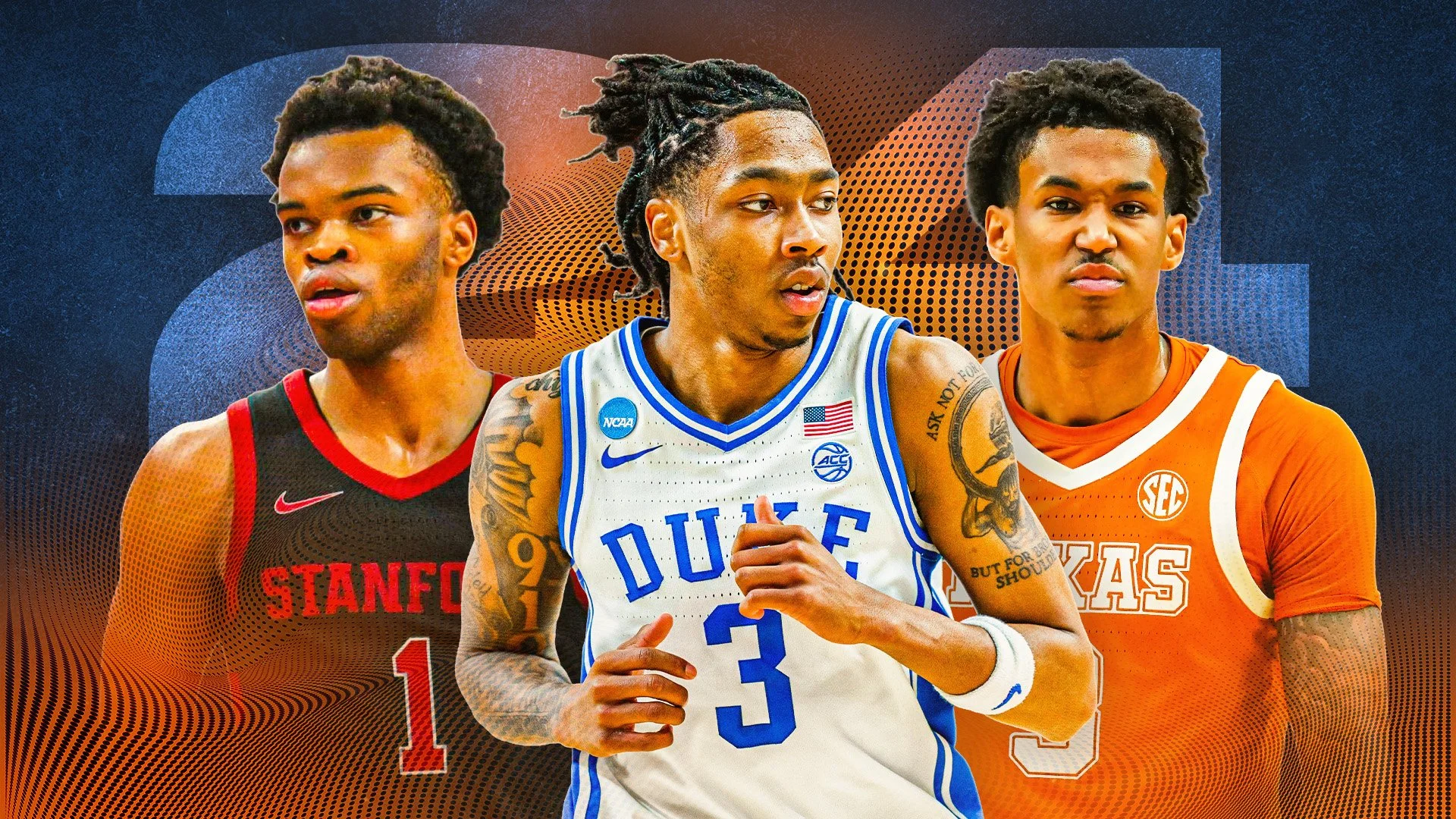
The New York Knicks are set to enter the 2026 NBA Draft with three picks that will give them real chances to add cheap and impactful players to reload a championship roster that might be facing a luxury tax apron crunch. While the majority of the team’s core has been acquired via free agency or trade, Knicks President of Basketball Operations Leon Rose and his staff have drafted well in his tenure. Even though most of their recent promising young players have been shipped out in deals for established veterans, they wouldn’t have OG Anunoby without drafting and developing Immanuel Quickley. They have seven of Rose’s young draftees waiting in the wings for increased roles. Mo Diawara and Tyler Kolek played real minutes in the regular season, and Ariel Hukporti is even spelled KAT and Mitch for brief stretches in this year’s playoffs, including some pretty impactful minutes in the NBA Finals.
The roster is in flux and there are opportunities for the incumbent young guys to join the rotation next season. Even with Mitchell Robinson, Landry Shamet, Jordan Clarkson, Mo Diawara, Ariel Hukporti, and Jeremy Sochan unsigned for next season, the Knicks already have the NBA’s fifth most salary tied up for the 2026-2027 season. That’s the price of a championship roster. Further team building will likely lean on developing their young talent and another year of inexpensive draftees alongside veteran minimum signings. Expect multiple second-round picks to join the team next season, as they provide cheap contracts that round out the final spots on the bench or even replace existing rookie contract bets.
The Knicks likely won’t pick exactly at their current draft slots of 24, 31, and 55, since they’ve made draft-day trades in six of seven years of Rose’s tenure with the organization. There will likely be minor trades and tweaks in draft position, but it’s reasonable to expect the Knicks to select three players in these ranges on June 23 and 24. This Knicks regime loves to find value at these sections of the draft – outside of Obi Toppin (No. 8 overall) and Trevor Keels (No. 42), every single player the Knicks have taken falls within these ranges. Immanuel Quickley, Quentin Grimes, and Pacome Dadiet all went No. 25 overall. Miles McBride, Tyler Kolek, and Rokas Jokubaitis were selected in the early- to mid-30s. Mo Diawara, Jericho Sims, Ariel Hukporti, and Kevin McCullar Jr. were all drafted in the 50s.
Knicks scouts should be jumping for joy having multiple picks during the 2026 draft, which appears as of now to be one of the best and deepest in history. Despite the flood of college players returning to the NCAA for their massive NIL checks (most recently Ruben Chinyelu, who would have been featured in this series of articles), there’s still a great deal of talent to be had throughout the draft. The future success of the team depends on how successfully they scout, draft, and develop these young players, even if they ultimately trade them away to add veterans to the current championship window.
Using a consensus big board, rather than my own, we can understand the draft range of different prospects according to the mainstream media. This article uses these rankings as of June 15, as they’re constantly being updated. In this Knicks Picks series, I’ll lay out the case for my five favorite prospects for the Knicks in each range. Let’s start with the first round pick at 24, which stands as the Knicks’ best chance to get a quality rotational player for next year’s roster, or a young player with serious upside.
Jayden Quaintance
Sophomore Big, Kentucky
Consensus rank: 19
Stats (2024-2025 Season): 9.4 PPG, 7.9 RPG, 1.5 APG
NBA Combine measurements:
Height (barefoot): 6’9”
Wingspan: 7’5.25”
Reach: 9’1”
Weight: 253 lbs
Max vertical: N/A
Jayden Quaintance might have been a top 10 pick in last year's draft, had he been old enough to be eligible. Because he reclassified to enter college a year early, he just finished his sophomore year, but is the second-youngest player in the entire draft. He's older than projected top-3 pick and NCAA Player Of The Year one-and-done freshman Cameron Boozer by just seven days.
Quaintance has fallen into the Knicks' range not because of scouts doubting his talent, but because of the slew of questions that were raised after he tore his ACL at the end of his freshman season with Arizona State, and the lingering knee problems that caused him to play only four games for Kentucky this year. It couldn't have been a more disappointing outcome after being a star addition to that team in the transfer portal. He barely even practiced in 5-on-5 with his teammates before being thrown into the fire against elite teams, St. John's and Alabama, and the results were incredibly mixed. In my opinion, it's unlikely but entirely possible he falls out of the lottery and into the late first round, where the Knicks would have a chance to add a prospect with top-10 upside.
Quaintance may well be the best defender in the draft. His defensive acumen, combined with his innate athletic tools, means his opponents just don't make shots when he guards them. He has elite lateral quickness, smooth hips, and a long wingspan that absolutely swallows up drives from guards and wings when he switches onto them on the perimeter. He has the weight, reach (a plus-eight inch wingspan is no joke), balance, and quick-twitch bounce to bully opposing centers in the post or contest at the apex of their shots. He does all of this while being incredibly disciplined, with great hands that rarely commit fouls despite his massive defensive burden.
On the flipside, his offensive game is much more raw. He makes the most of his physical tools as an above-the-rim play finisher and elite offensive rebounder. However, we haven't yet seen consistent additional skills, such as feel for the game, touch from the post, or driving ability, that would take him to the next level. But he has shown real flashes of each of these in his limited minutes — like handle and aggressiveness to attack and drive past slower bigs, as well as passing ability to open shooters or cutters out of the post or elbow. These flashes, combined with his young age, provide enough reasons for optimism that he can be a strong offensive option with a few more years of consistent development.
For the Knicks, he'd be a longer-term developmental piece who can provide immediate impact in spot minutes while developing behind Karl-Anthony Towns and Mitchell Robinson. He's already better than Ariel Hukporti and Jeremy Sochan. The kid just needs to stay healthy.
Player Comparisons: Robert Williams, Jarrett Allen, Bam Adebayo
Dailyn Swain
Junior Wing, Texas
Consensus rank: 22
Stats: 17.3 PPG, 7.5 RPG, 3.6 APG
NBA Combine measurements:
Height (barefoot): 6’6.5”
Wingspan: 6’10”
Reach: 8’8.5”
Weight: 211 lbs
Max vertical: 36.5”
Dailyn Swain is one of the best on-ball creators in this draft class, and the Knicks need more ball handlers who can get to the rim. Swain was by far the best player on a Texas team that he carried on his back into the NCAA tournament, through multiple upsets, all the way to the Sweet 16. While Swain wouldn’t be asked to carry the offensive load he did at Texas, on the Knicks, he would be one of the team’s better on-ball drivers. He’s an athletic wing with some serious wiggle, carving his way to the basket at his own pace in isolation or in the pick-and-roll. Once he gets there, he plays with patience off of two feet to score or make plays for teammates.
While he isn’t much of a 3-point threat at this point, he developed a good pull-up jumper from above the break this year, making 35% of his threes on a heavy diet of tough shots off the dribble. If he develops his catch-and-shoot jumper to draw closeouts, he’ll see real minutes for the corner three-addicted Knicks. There’s reason for optimism there, and the shot certainly has further potential. Swain shot over 80% from the free throw line in each of his three collegiate seasons — a key indicator of shooting touch. This version of Swain would add a versatile on-ball wing to the Wingstop pairing of OG Anunoby and Mikal Bridges, something the Knicks currently lack.
On defense, Swain is a rangy perimeter defender who can smother guards and forwards at the point of attack. He’s quick and strong, with great hands to pick up deflections. Despite his strengths, he can be prone to racking up fouls and losing his man off the ball.
Swain is an upperclassman, but he’s one of only eight Division I juniors under 21 years old. Youth is still on his side and he has clear upside. Frankly, I’d be shocked if he falls into the 20s. If he does, however, he should be a top target for the Knicks.
Player Comparisons: Naji Marshall, Paul George, Ron Holland
Allen Graves
Freshman Forward, Santa Clara
Consensus rank: 23
Stats: 11.8 PPG, 6.5 RPG, 1.8 APG
NBA Combine measurements:
Height (barefoot): 6’7.75”
Wingspan: 7’0”
Reach: 8’10.5”
Weight: 226 lbs
Max vertical: 34”
Allen Graves is an interesting prospect to evaluate, but it’s easy to see how he’d fit the Knicks, a team that prioritizes extra possessions. Graves generates steals and blocks like nobody else in college, rebounds the hell outta the ball, and never turns it over. He would probably be a plug-and-play forward making an impact in year one, at least covering the Jeremy Sochan role as a defensive specialist forward and small-ball big.
Graves is an older freshman forward who came off the bench for a good mid-major team and played most of his minutes at center. He’s not a particularly good athlete, as he graded out well below average in each of the Draft Combine strength and agility tests. But athleticism isn’t everything. With Graves, defense comes first. He showed absolutely elite defensive tools, as the only player in D-I this year to post a block percentage better than 4% and a steal percentage better than 4.5%. Tari Eason and Matisse Thuybulle are the only drafted players ever to reach those marks, who are 99th percentile defenders in the NBA. This versatility means he can comfortably defend the post and switch onto the perimeter at the point of attack. He’s also incredibly smart with his positioning off the ball to rack up steals in passing lanes. He may very well end up being the best defender in this draft class, though his defensive stats may be somewhat inflated due to playing out of position as a center. Regardless, nobody generated both steals and blocks like Graves this year (Maliq Brown has something to say about this, and I’ll talk about him in a later piece in the second round).
On the offensive side of the ball, Graves isn’t much of a shot creator, and he doesn’t have another singular skill to hang his hat on. But he’s an elite rebounder and a good enough shooter, passer, cutter, and screener without ever turning the ball over. That’s a good recipe for a forward who will never need to be a top offensive option to impact games and stick in the NBA.
Player Comparisons: Dean Wade, Grant Williams, Kenrich Williams
Ebuka Okorie
Freshman Combo Guard, Stanford
Consensus rank: 24
Stats: 23.2 PPG, 3.6 RPG, 3.6 APG
NBA Combine measurements:
Height (barefoot): 6’1.25”
Wingspan: 6’7.75”
Reach: 8’2”
Weight: 186 lbs
Max vertical: 37.5”
Ebuka Okorie has some of the best offensive upside in this draft class, full stop. He might be the best player available if he falls to 24. He’s only 6-foot-1, and he played pretty much exclusively on-ball at Stanford, which muddies the fit for a Knicks team that requires their guys to work well off-ball if they’re not named Jalen Brunson. He’d have to adjust, but he’s still an elite shooter and a solid defender who could fill a Landry Shamet-type role in his first few years while developing his fuller skillset behind Brunson. Brunson would be an incredible role model for Okorie.
Okorie’s ceiling is that of an elite primary offensive initiator who doesn’t need to be hidden on defense. As a freshman, he was D-I’s eighth-leading scorer, just behind fellow freshman and projected top-seven pick Darius Acuff’s 23.5 points per game. Similar to Acuff, Okorie carried a massive offensive creation load but just didn’t have the supporting cast that truly allowed Acuff to shine at Arkansas. Stanford went just 9-9 in ACC play and missed out on the NCAA tournament entirely. The only other impact player on the team was senior captain Benny Gealer, a barely-6-foot-tall former walk-on who plays with heart and has a great shot alongside serious limitations. Stanford had no bigs, literally, who could give Okorie a good screen or convert easy passes at the rim, so he had to do almost everything out of isolation. Amazingly, he was successful. Okorie made more unassisted buckets at the rim than any other D-I guard outside of Wisconsin senior Nick Boyd. With the luxury of more assisted shots, his efficiency would likely skyrocket. He fits the description of an overqualified role player to a T.
The knocks on Okorie’s game are his lack of passing and midrange counters. Some of this blame can be placed on the play finishing abilities of his teammates, but not all of it. He’s firmly a combo guard, not yet a point guard, and if he never finds his way to playing the point, he’s undersized as a shooting guard. That being said, he plays committed and intense defense even while shouldering a heavy offensive usage. He’s quick containing opposing guards on the perimeter and his long wingspan and engagement show in his strong off-ball defense in passing lanes. Even if he doesn’t further develop his playmaking as a true point guard, he should be able to survive in the league as a sparkplug scorer and who provides strong defense. He has already shown so much growth this year, coming into college as the 90th ranked freshman in his class (via 247 Sports) and jumping firmly into first round draft pick status. He’s only 19 years old, and he projects to continue his development into an elite offensive option.
Player Comparisons: Tyrese Maxey, CJ McCollum, Nickeil Alexander-Walker
Isaiah Evans
Sophomore Wing, Duke
Consensus rank: 26
Stats: 15.0 PPG, 3.2 RPG, 1.3 APG
NBA Combine measurements:
Height (barefoot): 6’5.5”
Wingspan: 6’8.75”
Reach: 8’8.5”
Weight: 186 lbs
Max vertical: 35.5”
In a class full of great shooters, Isaiah Evans might be the best. After biding his time and waiting his turn last year behind NBA guards Kon Kneuppel, Sion James, and Tyrese Proctor, Evans broke out in a big way in his sophomore season as Duke’s second-leading scorer. Right now, he’s best off-ball, spotting up, shooting off of movement, and cutting to the rim, where he has the athleticism to throw it down, posting an elite 22 dunks this past season. He’s an incredible spot-up and catch-and-shoot threat, and he’s constantly relocating to find the ball handler’s eye and get himself open, doing his work before he gets the ball. Mike Brown loves shooters who get to the corners quickly, and Evans sprints to find space there almost every possession — on good volume, he knocked down an elite 45% of his corner threes. When he gets hot from deep, he’s an unstoppable force with a lightning-quick trigger, a high release point, and a burner.
Evans also impacts the game on defense and with his hustle. While he might be best known for not contesting and getting his hand up against UConn’s Braylon Mullins and his all-timer game-winning shot in the Final Four, he fights on that side of the ball, pressuring ball handlers, diving on the floor for loose balls, and using his athleticism to provide help side defense at the rim. Even when the shot isn’t falling, he creates an impact.
His biggest flaw is hard to overlook and will almost certainly cap his ceiling. Despite having solid size, he’s rail thin at only 186 pounds, with a frame that’s hard to see filling out. Despite his best efforts, his game often lacks a certain level of physicality, and we see this in his lackluster defense against bigger players, poor rebounding, and inability to draw fouls and get to the free-throw line.
That being said, I think Evans is a winner and a great teammate. He was the North Carolina Player of the Year as a senior in high school, and at Duke, he took his bench role and frustratingly short leash in stride, often the only Duke bench player standing and cheering on his teammates. When he saw the court, he played with something to prove. It paid off in a big way as a sophomore, and he’s positioned himself to be a first round draft pick because of it.
Player Comparisons: Isaiah Joe, Max Strus, Malik Beasley
That’s all for the No. 24 primer — stay tuned for pieces detailing the No. 31 pick and trade-up options plus No. 55 options before the draft!