

Retro recap - 12/11/01: Celtics 102, Knicks 93 (OT)
The day everything changed. Right?
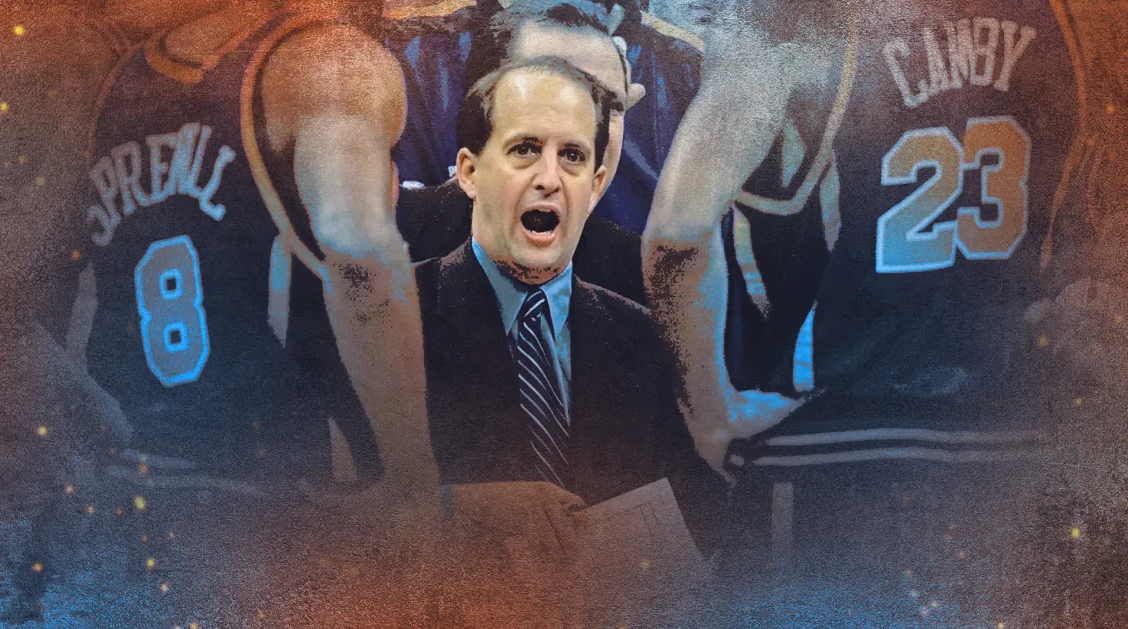
The December 11, 2001 New York Times offers glimpses of a world barely recognizable all these years later.
That day Kenneth Chang wrote, “Ocean levels have been rising at a rate of about eight inches a century . . . new data suggests it is coming from Antarctica. No obvious explanation exists for the melting. The rise in global temperatures . . . would have negligible effect in the frigid climes of Antarctica, scientists say.” Can you imagine? Denying an extinction-level threat despite all the evidence supporting it? Not only neglecting that threat, but accelerating it? Neandertal stuff. Couldn’t happen now.
The paper of record had this to say after reporting the first drop in Wall Street broker bonuses in three years: “The $4.3 billion decline . . . means that some investment bankers may not be able to afford the new Jaguars of their dreams, and that their spouses may not find baubles from Harry Winston in their Christmas stockings.” Back then, gluttony and inequality ruled the land from sea to shining sea. Today they’re dinosaurs: monstrous, extinct reminders of a brutal world we’ve luckily left behind.
Back then, the president was an unqualified nepo dummy who Kanye West said hated Black people. Today the president is an unqualified nepo dummy whose policies by design brutalize Black and Brown people. Kanye loves him.
On December 9, 2001, Madison Square Garden hosted a benefit concert thrown by various Latino and Latina artists who raised over $400,000 for victims of the 9/11 attacks, victims of Flight 587 that crashed in Queens en route to Santo Domingo with 267 people aboard, and the Spanish Broadcasting System. Seven months ago, MSG hosted a political convention for a convicted sex criminal and 34-time convicted felon who’s claimed Mexicans bring “drugs, crime and rapists” to this country and ordered the kidnapping and illegal trafficking of nearly half a million mostly Black and Brown human beings (so far) . . . all sponsored by an apartheid nepo dummy who’d sell any one of the dozen kids he neglects for another bump of whatever keeps him chasing the dragon.
Two days later – December 11 – the 1990s Knicks ended.
THE BUILD-UP
If you’re too young (or old) to remember that day, take the surprise you felt hearing Tom Thibodeau was fired, then imagine he’d coached here six years instead of five, reached a Finals, survived the franchise taking a sledgehammer to its own legs with an all-time lousy trade, somehow won 48 games after, started out slowly the following season before winning five of six games, and then suddenly resigned. Now you’re getting warmer.
Today Van Gundy quitting is an obvious low point in franchise history, but at the time that was hardly the consensus among his players. Maybe that was fair. Today JVG is mostly known for his work broadcasting games, or was, before the NBA fired him for not treating the viewing public like we’re those inanimate cut-outs they stuck in the stands during COVID. Van Gundy treated us like viewing partners, not groupies.
Twenty-four years ago, Jeffrey was a hard-driving perfectionist who suffered neither fools nor foolishness. After the James Dolan era kicked off with a team starring two wings both best with the ball in their hands trading Patrick Ewing, their only big man who weighed more than Josh Hart, for a third headliner wing in Glen Rice was . . . a choice. It was also the Beatles breaking up, at least for Van Gundy.
He wasn’t New York’s head coach until 1996, but he’d been an assistant since 1989. Ewing was there all those years. Charles Oakley was through 1998. John Starks, too. The little-coach-that-could witnessed that whole gutty, glorious, gut-wrenching decade. Oakley and Starks were traded before the Knicks’ final Finals run; not long after, Ewing and Van Gundy were out.
Reactions to JVG leaving were mixed. Marcus Camby and Mark Jackson both spoke with or received messages from him. He spent 15 minutes on the phone with Latrell Sprewell. Ironically, the Knick forever famous for making the shot that saved Van Gundy’s job in 1999 and being about as controversial as Ned Flanders — other than joining Charlie Ward in claiming Jews oppress Christians and are to blame for Jesus dying — engendered the most speculation.
Van Gundy didn’t reach out to Allan Houston, nor did Houston reciprocate. “I wish I had had a better relationship with Jeff,” Houston said then. “We never communicated real well and I really don’t understand why. But I think we had a professional relationship. We respected each other. I guess I just wish it was better.” If you were expecting some salacious quote, I trust you’ve never heard Houston speak. Even if he’d said more, it would have been quashed. Houston’s been a Garden golden boy ever since signing there in 1996. Looking for a fall guy? Not gonna be him.
As for Sprewell, he’d become infamous for choking and threatening to kill P.J. Carlesimo, his coach in Golden State, then showering, changing, returning 20 minutes later and hitting Carlesimo in the face before assistant coaches hauled him off. That’s the only reason the Knicks were able to acquire a 28-year-old All-NBA starter (who replaced Michael Jordan on the First Team after MJ’s first retirement) for three reserves all older than him: Starks (32), Terry Cummings (36) and Chris Mills (28).
David Stern, agonizingly aware a Black player had made a white person somewhere uncomfortable, suspended Sprewell the rest of the season and voided the remainder of his Warriors deal – three years and nearly $24 million. The union appealed. An arbitrator eventually overturned the voided contract, but Sprewell was suspended the final 68 games of the 1998 season, the longest in league history until some putz in Detroit tugged on Ron Artest’s cape.
During his enforced absence, Spree spent three months under house arrest after driving 90 MPH and causing an accident that injured two people. If you’re sensing the man may have had a blind spot to his impact on other people, consider what he told 60 Minutes about attacking Carlesimo: “I wasn’t choking P.J. that hard. I mean, he could breathe.” Yikes.
While Houston and Van Gundy were not the closest of comrades, Sprewell and JVG grew noticeably closer over their years together. Some wondered if that made Houston jealous. Spree was clear immediately after the resignation that just because the Knicks would now be looser and freer didn’t mean they’d be any better, just as jettisoning the older, lumbering Ewing made them faster and younger but ultimately worse.
“I don’t want it to get too relaxed,” Sprewell said. “We still need to have a certain discipline about ourselves.” The ubiquitous “a person close to Sprewell” named names: “Latrell knows that he needs to be pushed and he definitely knows that Allan and Marcus need it. That’s what they respond to. Any other way isn’t going to work.”
Van Gundy leaving led to Don Chaney landing his fourth head coaching job, after stints with the Clippers, Rockets and Pistons. A five-time All-Defense selection and two-time champion as a player, mostly with Boston, Chaney was the last holdover from Don Nelson’s New York brief reign of error. Promoting Chaney didn’t drive a rush on ticket sales, but the old boss let the fans know the new boss, a former Coach of the Year, was no joke.
“What people too often do is mistake his kindness for lack of intensity,” Van Gundy told reporters. “They would be wrong. You don’t make the All-Defensive team if you’re not an intense competitor. You don’t win 15 straight games without Hakeem Olajuwon if you’re not an intense coach.”
The irony of Van Gundy quitting was he did so right as the Knicks seemed to have righted the ship. After a stumbling opening few weeks, seven wins in nine bridging JVG and Chaney put them back over .500. Chaney’s first game at the helm was a home win over Indiana, putting the Knicks on a three-game winning streak going into their December 11th game versus Boston.
